
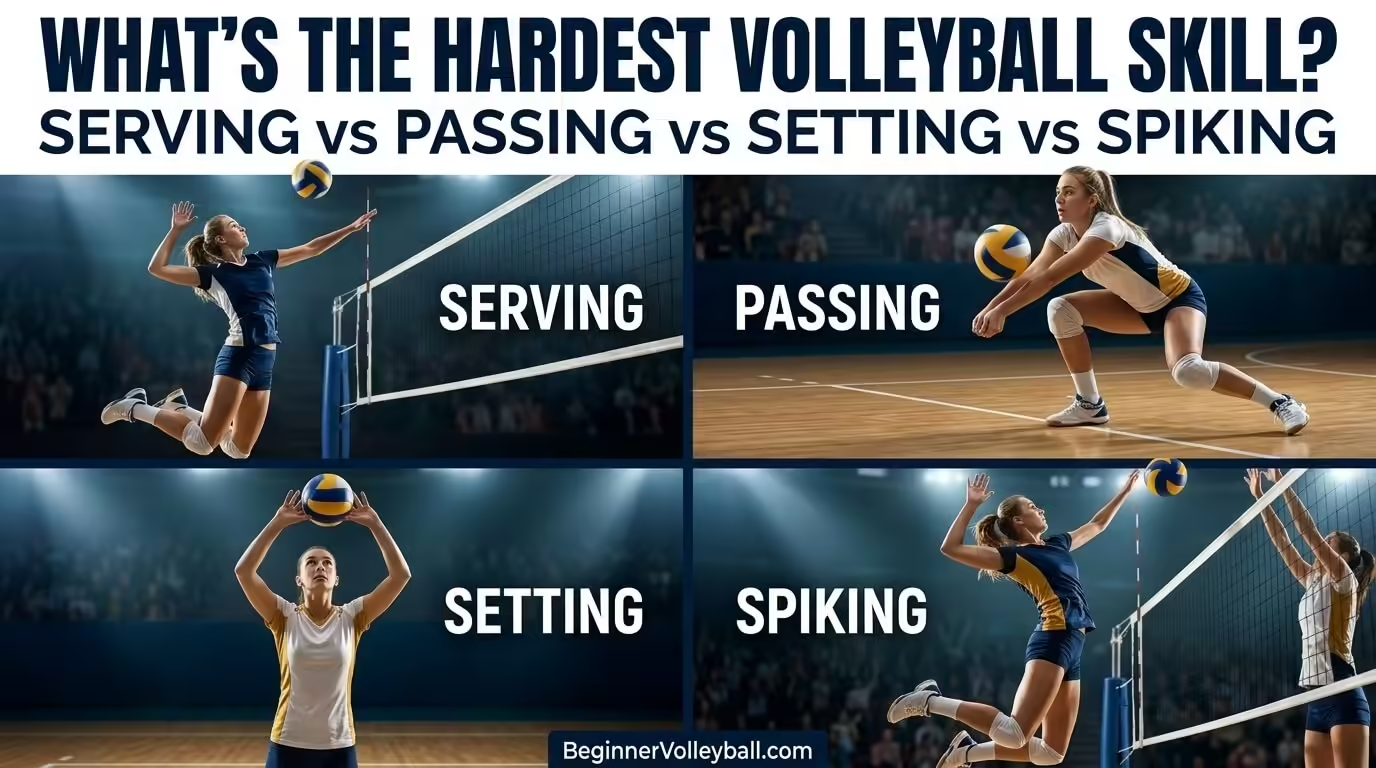
What is the hardest volleyball skill to master? Compare setting, passing, spiking, and serving to see which requires the most precision and skill. Serving, passing, setting, or spiking—which is truly the hardest volleyball skill to master?
Whether you are a athlete wanting to improve your performance or a fan debating court strategy, understanding the technical, physical, and psychological demands of each skill is key. While every position requires athleticism and strategy, coaches and elite players widely consider setting and passing to be the hardest volleyball skills to master.
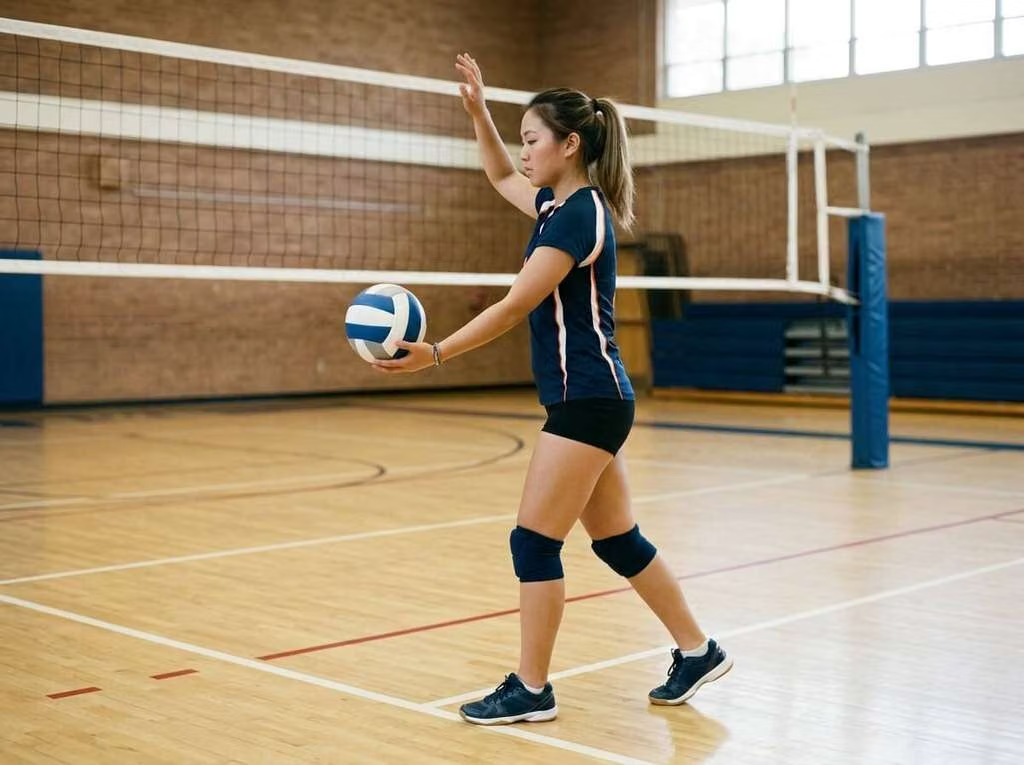
In this guide, we break down the technique, mental pressure, and execution of all four core volleyball skills so you can settle the debate once and for all. You Can Learn 10 Easy Volleyball Serving Drills for Beginners
Quick Comparison: Ranking Volleyball Skills by Difficulty
| Volleyball Skill | Primary Role | Difficulty Rating | Key Challenge |
| Setting | Runs the offensive play | 🥇 Hardest Overall | Extreme hand precision & instant decision-making |
| Passing / Serve Receive | Neutralizes opponent serves | 🥈 Most Pressure-Heavy | Fast reaction times & platform stability |
| Spiking / Attacking | Scores points at the net | 🥉 Most Physically Demanding | Timing, jump mechanics, & mid-air vision |
| Serving | Initiates every rally | 🎖️ Easiest to Isolate | Ball toss consistency & mechanics |
1. Setting: The Hardest Volleyball Skill to Master
For many tactical analysts, setting is routinely crowned the single hardest volleyball skill because it demands micro-precision finger control and elite tactical awareness on nearly every single offensive touch.
Why Setting Is So Difficult:
- Micro-Precision Under Pressure: A setter must contact the ball with soft, quick hands. Misjudging by a fraction of an inch can result in an illegal “double contact” fault or render the set unhittable for the attacker.
- The “Quarterback” Strategy: In under half a second, setters must evaluate the pass, analyze the opposing team’s block, read defense positioning, and deliver a perfectly placed ball tailored to their hitter.
- High Volume of Touches: Setters touch the ball on almost every rally, requiring non-stop focus, consistent footwork, and decision-making throughout an entire match.
2. Passing (Serve Receive): The Most Pressure-Heavy Skill
Passing is widely regarded as the most critical fundamental in volleyball. Without a solid pass, a team cannot execute an offensive play—making clean serve-receive a strong contender for the hardest volleyball skill when facing high-velocity serves.

Why Passing Is Challenging:
- Split-Second Reaction Times: High-level serves can travel between 60 to 70 mph (100+ km/h) with unpredictable float or topspin. Passers have mere milliseconds to read movement and position their body.
- Platform Control: Absorbing massive velocity while maintaining a stable, flat “platform” (forearm angle) to direct the ball smoothly to the setter requires years of muscle memory.
- High Psychological Strain: Opponents deliberately target weak passers. A passing mistake often results in an immediate ace for the opponent, placing heavy mental pressure on the passer.
3. Spiking: The Most Physically Demanding Skill
Spiking (or hitting) combines explosive vertical leaping power with rapid body coordination to score points past the net defense. While it is physically exhausting, players often debate whether the athletic toll makes it the hardest volleyball skill compared to the mental precision required for setting.
Why Spiking Takes Mastery:
- Complex Timing & Footwork: Hitters must coordinate a four-step approach, explosive takeoff, body rotation, and arm swing while calculating a ball moving in mid-air.
- Mid-Air Vision: Elite spikers scan opposing blockers and backrow defenders while elevated, deciding in a split second whether to power through a block, tip over it, or hit line vs. cross-court.
- Severe Physical Strain: The repetitive explosive jumping and overhead arm acceleration generate high strain on shoulders, core muscles, and knees.
4. Serving: The Only Skill You Fully Control
Serving is unique because it is a closed-loop skill—it is the only moment in volleyball where the opponent cannot directly interfere with your play execution.
Why Serving Is Easier to Learn (But Hard to Perfect):
- Complete Self-Control: The server dictates the tempo, toss, and execution without relying on a teammate’s prior pass or set.
- Beginner-Friendly Mechanics: Basic underhand and standing float serves rely on simple, repeatable mechanical movements.
- Advanced Difficulty: Transitioning to high-level jump floaters or aggressive jump spin serves requires flawless toss consistency and powerful leg-and-arm mechanics.
Frequently Asked Questions (FAQ)
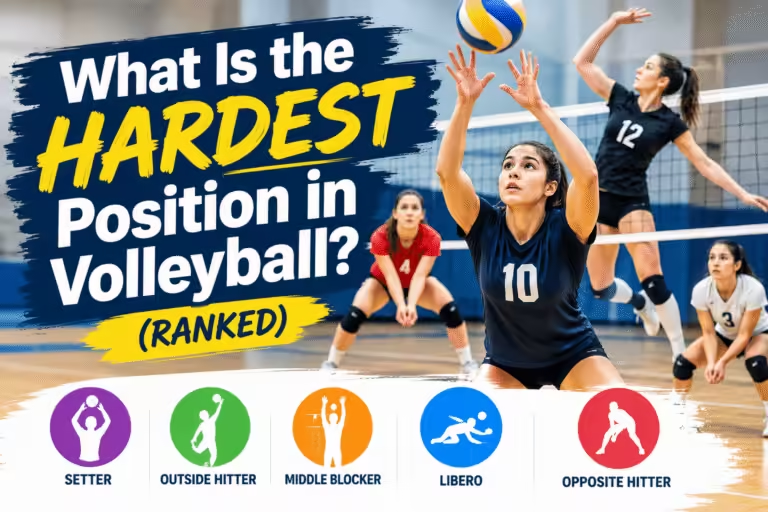
Which volleyball position is the hardest to play?
The setter position is generally considered the hardest position to play. It requires complex setting mechanics combined with the tactical responsibility of directing the entire offense.
What is the most important skill in volleyball?
Passing is widely recognized as the most important skill. If a team cannot control serve receive, they cannot set or spike, rendering offensive strategy ineffective.
Is serving or spiking harder to master?
Spiking is significantly harder to master than serving. Spiking requires timing a moving ball in mid-air alongside explosive jump mechanics, whereas serving is an isolated, self-controlled action. Learn more from our community
What is the hardest volleyball skill for beginners?
For beginners, passing presents the steepest learning curve. New players often struggle with ball judgment, forming a steady platform, and controlling high-velocity serves.

2 Comments