Learn how to start playing volleyball as an adult with beginner-friendly tips on basic rules, essential skills, equipment, practice drills, and finding a team.
Have you ever wanted to play volleyball but felt you were too old to start? The truth is that you don’t need to be a teenager, a former athlete, or an experienced player to enjoy this sport. With consistent practice, patience, and the right approach, you can learn volleyball as an adult.
Learning how to start playing volleyball as an adult begins with understanding the basic rules, practicing essential skills, and finding a welcoming place to play. You don’t need expensive equipment or exceptional athletic ability to get started.
Volleyball offers an enjoyable way to stay active, improve coordination, challenge yourself, and meet new people. Whether you want to play casually with friends, join a recreational team, or develop your athletic skills, this guide will help you get started with confidence.
How to Start Playing Volleyball as an Adult: First Steps?
Yes! Adults can learn volleyball at different ages and fitness levels, even without previous sports experience.
Although experienced players may have spent years developing their skills, beginners can make progress by learning one technique at a time. You don’t have to master every skill before joining a recreational game.
Start with basic passing, setting, serving, and footwork. As your coordination and confidence improve, you can work on more advanced techniques such as spiking, blocking, and court positioning.
The key is to practice consistently, choose a suitable playing level, and avoid comparing your progress with that of experienced players. New players can explore the fundamentals of volleyball, including basic skills and rules, through USA Volleyball’s learning resources
1. Learn the Basic Rules of Volleyball
Before stepping onto the court, learn the basic rules of volleyball. Understanding how the game works will help you follow rallies, communicate with teammates, and enjoy your first matches.
Here are the main rules every beginner should know:
- Six players per team: Traditional indoor volleyball has six players on each side.
- Three touches: A team generally has up to three contacts to return the ball over the net, excluding a block touch under the applicable rules.
- Rally scoring: A point is awarded after every rally.
- Rotation: When the receiving team wins the right to serve, its players rotate one position clockwise.
- Ball in or out: A ball that touches the boundary line is considered in.
- Serving: The server must serve from behind the end line and follow the applicable service rules.
Indoor volleyball sets are generally played to 25 points, with a two-point winning margin. A deciding fifth set is generally played to 15 points, also requiring a two-point margin.
You don’t need to memorize every official rule immediately. Learn the basics first, then develop your understanding as you gain experience.
Beginner tip: Review the basic rules before your first recreational game so you feel more comfortable following the action. For more detailed information about match regulations, consult the official FIVB volleyball rules
2. Get the Right Volleyball Equipment
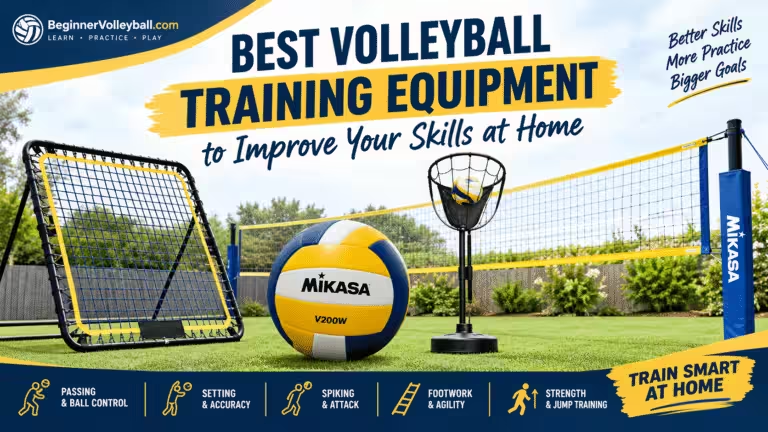
You can begin playing volleyball with a few essential items. There’s no need to buy professional equipment before you know which type of volleyball you enjoy.
Volleyball
Choose a ball that feels comfortable to handle. A standard adult indoor volleyball is usually size 5. Beginners who are uncomfortable with a firm ball may prefer a softer training ball for initial practice.
Court shoes
Wear athletic shoes that provide suitable grip, stability, and support. Volleyball shoes are designed for court movement, but appropriate court shoes can also work for recreational play.
Comfortable sportswear
Choose lightweight, breathable clothing that allows you to bend, jump, and move freely.
Knee pads
Knee pads are optional but can be helpful during defensive drills and floor practice. Learn safe movement and falling techniques before attempting dives.
Water bottle
Bring water and take regular breaks, particularly during long sessions or in hot conditions.
If you plan to play beach volleyball, choose equipment and footwear appropriate for sand and outdoor conditions.
Start with the basics and add specialized training equipment only when you need it.
3. Practice Five Essential Volleyball Skills
When learning volleyball as an adult, focus on fundamental techniques before attempting difficult movements.
Skill 1: Master the ready position
The ready position helps you react quickly when the ball comes toward you.
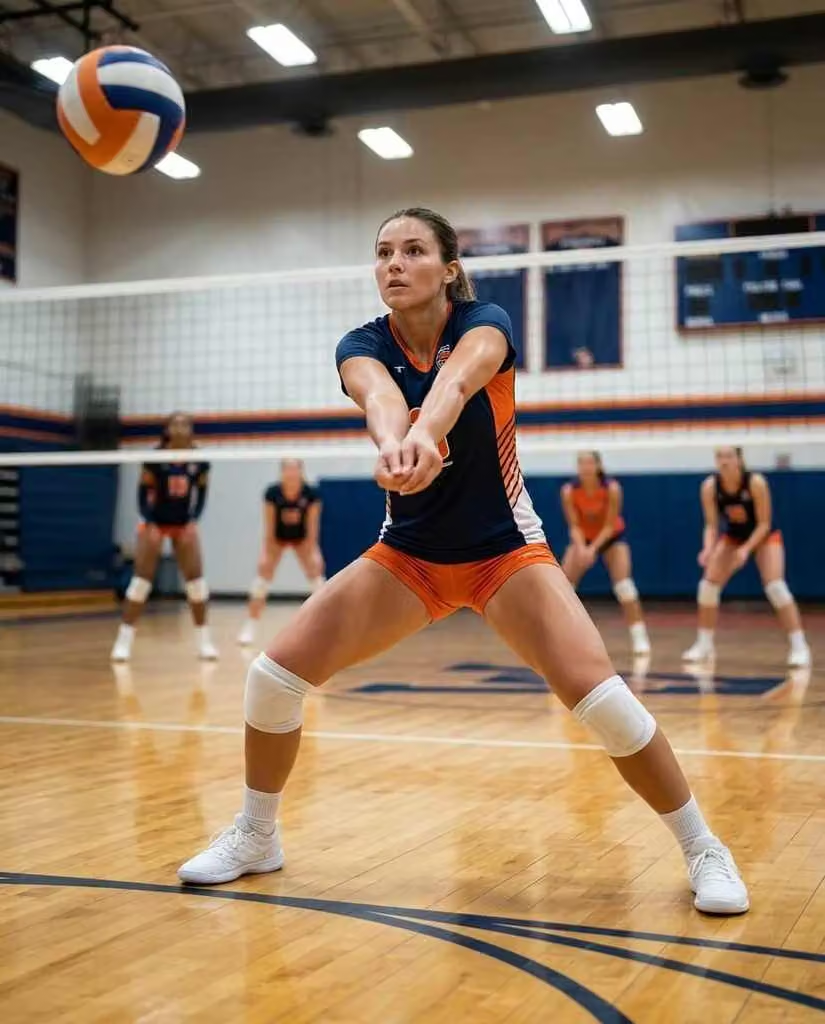
Follow these steps:
- Stand with your feet approximately shoulder-width apart.
- Bend your knees slightly.
- Lean forward comfortably from your hips.
- Keep your arms in front of your body.
- Stay balanced and watch the ball.
Avoid standing upright with locked knees. A balanced stance makes it easier to move forward, backward, and sideways.
Practice returning to this position after every movement.
Skill 2: Learn forearm passing
Forearm passing, often called bumping, is essential for receiving serves and controlling low balls.
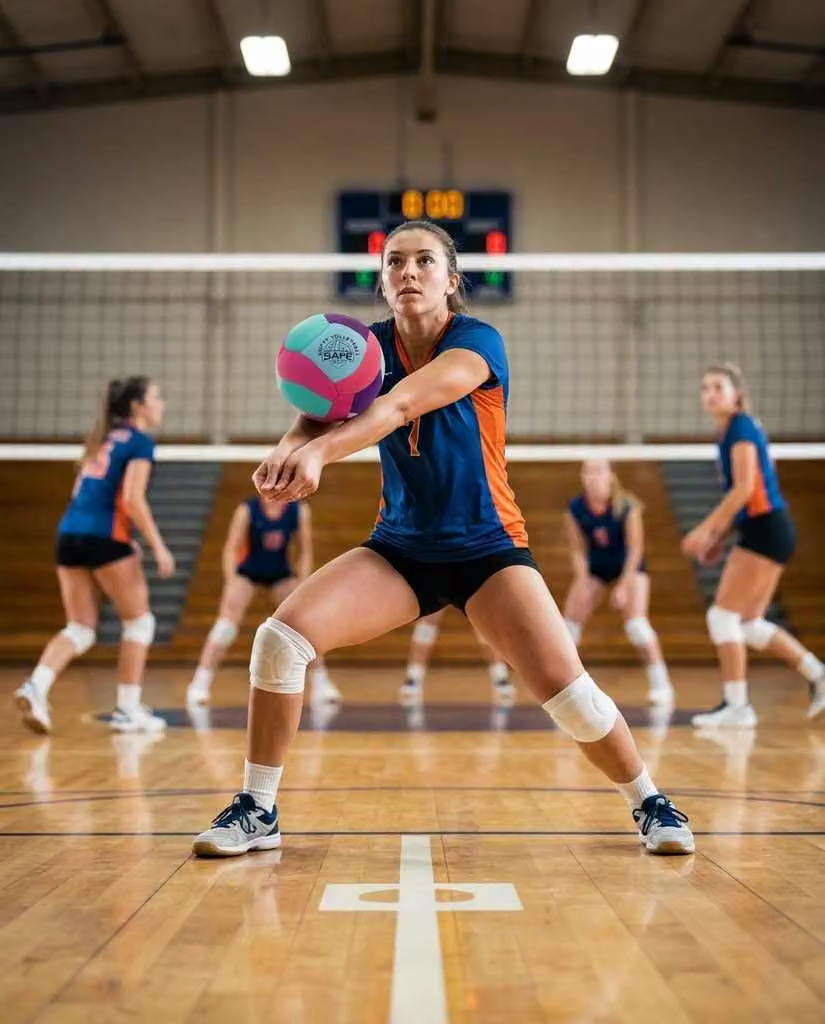
To practice:
- Bring your hands together to create a stable platform.
- Keep your elbows straight but relaxed.
- Position your forearms together.
- Move your body behind the ball.
- Contact the ball with your forearms.
- Use your legs and body position to guide the ball toward your target.
Avoid swinging your arms excessively. Consistent passing depends on positioning, a stable platform, and controlled movement.
Beginner drill: Toss the ball gently to yourself and pass it upward. Try to complete five controlled passes before increasing the difficulty.
Skill 3: Practice overhead setting
Setting is the technique used to direct the ball toward an attacker or teammate.
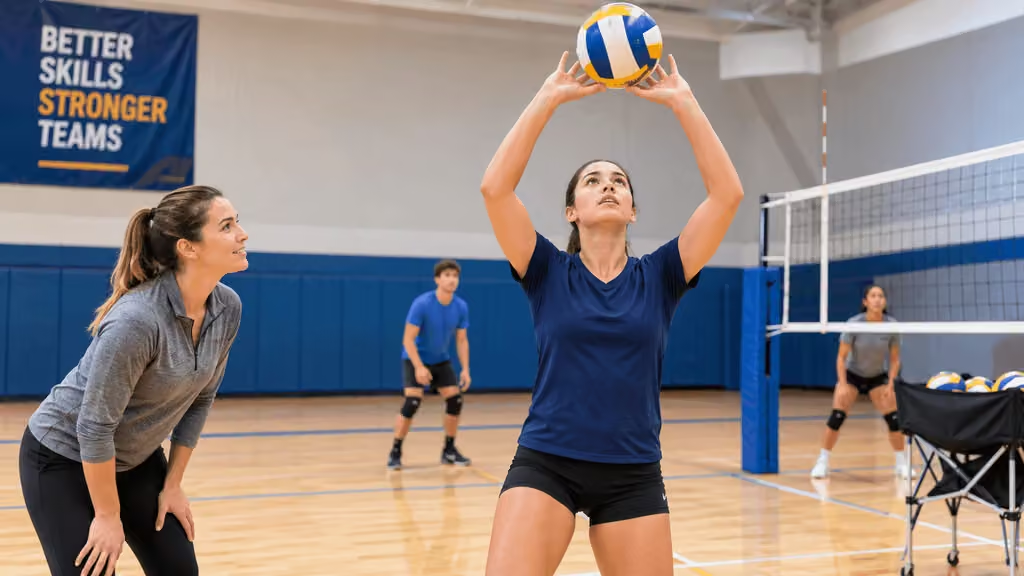
To develop your setting technique:
- Position yourself underneath the ball.
- Bend your knees slightly.
- Place your hands above your forehead.
- Spread your fingers naturally.
- Contact the ball with your fingertips rather than your palms.
- Extend your arms and legs smoothly to send the ball upward.
Start with gentle self-tosses. Focus on control and positioning instead of trying to set the ball as high as possible.
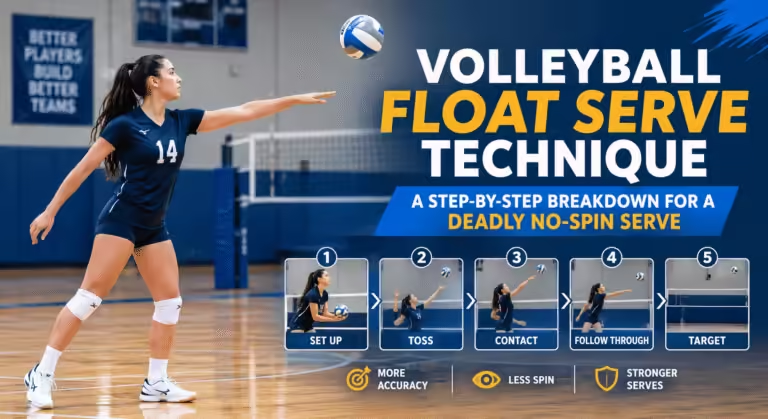
Skill 4: Learn a reliable serve
Serving begins every rally, making it one of the most valuable skills for adult beginners.
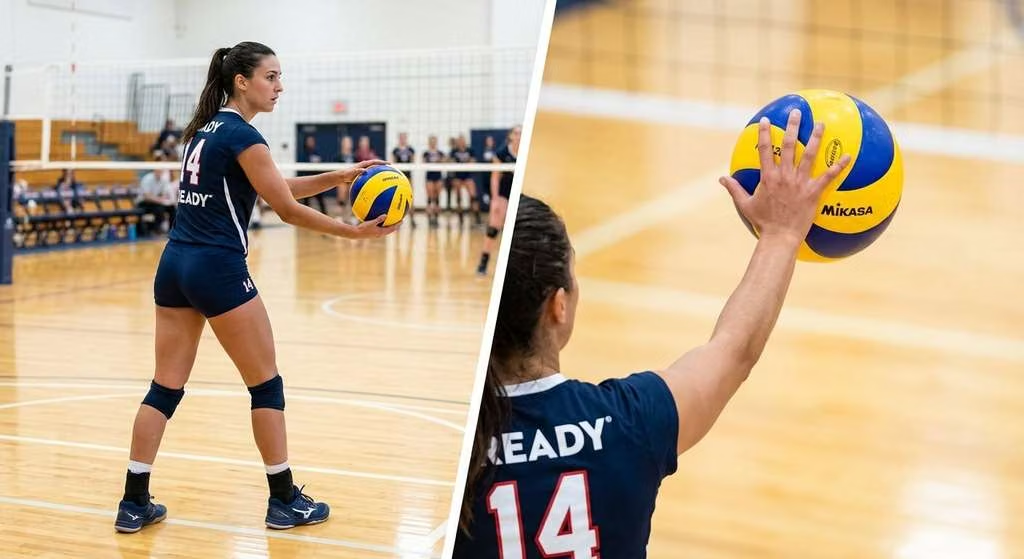
An underhand serve is often a comfortable starting point.
- Stand behind the end line.
- Hold the ball in front of your body.
- Step forward with the foot opposite your hitting hand.
- Swing your hitting arm forward.
- Contact the lower part of the ball with a firm hand.
- Aim to send the ball over the net and into the court.
Begin with controlled attempts rather than trying to serve with maximum power.
Once you can serve consistently, start learning an overhand serve to expand your options.
Skill 5: Improve your footwork
Volleyball requires quick movement while maintaining balance.
Practice moving forward, backward, and sideways using short, controlled steps. After each movement, return to your ready position.
Place three cones or safe markers on the floor. Start in the middle, move toward one marker, return to the center, and repeat.
Keep the movements comfortable at first. Increase your speed as your coordination improves.
4. Build Your Fitness Gradually
You don’t need to be in excellent physical condition before starting volleyball. However, improving your general fitness can make practice more comfortable and help prepare your body for the demands of the sport.
Focus on these four areas:
Cardiovascular endurance: Walking, cycling, or swimming can help develop stamina.
Leg strength: Bodyweight squats, step-ups, and supported lunges can help prepare your legs for court movement.
Core stability: Exercises such as bird dogs, dead bugs, and controlled planks can support balance and body control.
Mobility and coordination: Gentle ankle, hip, and shoulder movements can help you prepare for volleyball practice.
Start with manageable sessions and increase the intensity gradually. Avoid suddenly adding repeated jumps, sprints, or demanding dives to your routine.
Warm up before playing and take rest days when needed. If you have an injury or concerns about vigorous exercise, seek appropriate professional guidance before beginning demanding training.
5. Find a Beginner-Friendly Volleyball Group
One of the best ways to learn volleyball is to practice with other beginners.
Look for adult beginner classes, recreational volleyball clubs, community sports programs, or local groups that welcome new players.
You can search community centers, sports facilities, social media groups, and local recreational leagues.
Before joining, consider these questions:
- Does the group welcome players with no experience?
- Are the games recreational rather than highly competitive?
- Can beginners ask questions and learn the rules?
- Is the playing environment suitable for your current fitness level?
- Are beginner drills or coaching available?
If you’re nervous about joining, contact the organizer and explain that you’re new to volleyball.
You can also practice with a friend. Learning together can make your first sessions more enjoyable and less intimidating.
Remember that you don’t need to be the best player on the court to participate and improve.
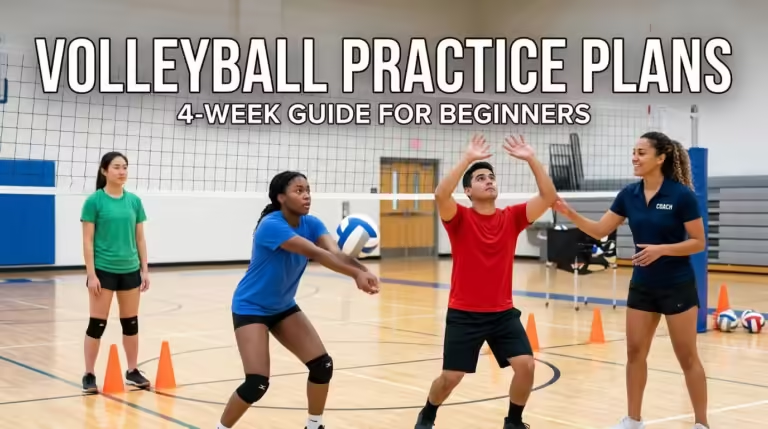
6. Follow a Simple Weekly Volleyball Practice Plan
A basic weekly schedule can help you improve without making training overwhelming.
| Day | Activity | Suggested time |
|---|---|---|
| Monday | Ready position, footwork, and passing | 20–30 minutes |
| Tuesday | Light cardio and basic strength exercises | 20–30 minutes |
| Wednesday | Serving and ball-control drills | 20–30 minutes |
| Thursday | Rest or gentle mobility work | 10–15 minutes |
| Friday | Passing, setting, and movement practice | 25–35 minutes |
| Saturday | Recreational game or partner practice | 30–60 minutes |
| Sunday | Rest and review your progress | As needed |
Adjust this schedule to your fitness, experience, and available time. If you’re new to exercise, begin with shorter sessions and additional rest.
Consistency is more useful than trying to practice every skill in a single workout.
For a more structured routine, explore our volleyball weekly training program for beginners.
7. Try Easy Volleyball Drills at Home
You don’t need a full court to practice several basic volleyball skills.
Wall passing drill
Stand a comfortable distance from a sturdy wall and gently pass the ball against it. Focus on maintaining a stable platform and controlling the ball’s direction.
Start slowly and prioritize technique over speed.
Self-setting drill
Toss the ball above your forehead and set it upward. Try to keep the ball above you rather than allowing it to drift too far forward or backward.
Begin with a few repetitions and rest when your hands or shoulders become tired.
Serving technique practice
Practice your serving stance, ball position, and arm swing in a safe open area. When you’re ready to serve over a net, use an appropriate court.
Avoid hard serves in rooms where the ball could damage objects or injure someone.
Footwork drill
Set up a few safe markers and practice moving between them. Stop under control and return to your ready position after every movement.
Ball-control drill
Gently toss the ball between your hands, practice tracking it at different heights, and work on catching it comfortably.
These drills help you become familiar with the ball before progressing to partner practice and full games.
For more ideas, read our guide to how to practice volleyball alone at home.
8. Understand Volleyball Positions
Traditional indoor volleyball uses six positions on the court. Each position has a role within the team’s rotation and playing system.
The main roles include:
- Setter: Directs the offense by delivering sets to attackers.
- Outside hitter: Attacks from the left side and often helps with serve reception.
- Opposite hitter: Commonly attacks from the right side.
- Middle blocker: Focuses on blocking and quick attacks near the center of the net.
- Libero: A specialized defensive player who wears a contrasting jersey and follows specific playing restrictions.
As a beginner, you don’t need to choose a permanent position immediately. Learning basic passing, setting, serving, and movement will help you understand how the different roles work.
Try different positions during recreational sessions and notice which skills you enjoy most.
Your height and jumping ability do not determine whether you can enjoy volleyball. Communication, anticipation, positioning, and teamwork also matter.
9. Overcome Common Challenges
Learning a new sport can feel uncomfortable, especially when other players have more experience. These challenges are normal.
Feeling too old to start
There is no single age at which recreational volleyball becomes off-limits. Choose a suitable playing level and focus on your personal goals, whether they involve fitness, enjoyment, social connection, or skill development.
Being afraid of the ball
Start with gentle tosses and predictable drills. A softer training ball may help you become more comfortable before progressing to a standard volleyball.
Gradually practice receiving balls from different directions and heights.
Struggling to serve over the net
Serving requires coordination, timing, and consistent contact. Break the movement into smaller steps and practice each part separately.
Focus on control before adding power.
Making mistakes during games
Mistakes are part of learning. After each rally, reset mentally and focus on the next play.
Choose one improvement at a time, such as moving toward the ball earlier or communicating more clearly.
Feeling intimidated by experienced players
Look for a group that welcomes beginners. Let teammates know you’re learning and ask questions when appropriate.
You don’t need to perform perfectly to contribute to a team.
10. Set Realistic Goals and Track Your Progress
Small, achievable goals can help you stay motivated.
Instead of expecting to become an advanced player immediately, focus on measurable improvements.
For example:
- Practice your ready position and footwork for ten minutes.
- Complete five controlled forearm passes in a row.
- Make ten serving attempts while concentrating on technique.
- Practice setting the ball consistently above your forehead.
- Attend one beginner-friendly recreational session.
- Learn the basic rotation rules before your next game.
After each session, write down what went well and choose one skill to work on next time.
Progress may not always be steady. Some days your passing will feel easier, while other days your timing may be inconsistent. That’s a normal part of learning a physical skill.
Celebrate improvements in control, confidence, movement, and communication—not just successful points.
11. Avoid Common Beginner Mistakes
Developing good habits early can make learning volleyball easier and more enjoyable.
Trying to hit the ball too hard: Focus on control and technique before increasing power.
Using your arms instead of your legs: Proper positioning and controlled body movement can improve passing consistency.
Skipping warm-ups: Prepare your muscles and joints before demanding activity.
Practicing only your favorite skill: Work on passing, setting, serving, and footwork to build a balanced foundation.
Doing too much too soon: Increase practice gradually and allow time for recovery.
Staying silent during rallies: Call the ball clearly and communicate with teammates to reduce confusion.
Comparing yourself with experienced players: Measure your progress against your own previous performance.
Good habits help you develop a strong foundation for future practice and recreational games.
Frequently Asked Questions
Can I start playing volleyball at 30, 40, or 50?
Yes. Adults can learn recreational volleyball at different ages. Choose a suitable playing level, build fitness gradually, and adapt training to your needs. If you have health or mobility concerns, seek appropriate professional advice before beginning demanding activity.
How long does it take to learn volleyball as an adult?
The time required depends on your previous sports experience, practice frequency, fitness, and goals. You may learn basic movements relatively quickly, but developing consistent passing, serving, setting, and game awareness takes ongoing practice.
Focus on steady improvement rather than an arbitrary deadline.
Is volleyball difficult for beginners?
Some skills, particularly serving, passing moving balls, and understanding rotation, take time to learn. Breaking them into smaller drills makes the process easier. Start with basic techniques and progress as your confidence improves.
Do I need to be fit before starting volleyball?
No. You can begin with gentle practice and gradually improve your fitness. Start with manageable sessions, warm up properly, and take breaks when needed.
Can I learn volleyball by myself?
Yes. You can practice serving technique, self-setting, ball control, and footwork alone. A wall and a suitable ball can also help with basic passing practice. Playing with others is important for learning teamwork, communication, positioning, and real-game situations.
What is the easiest volleyball skill to learn first?
The ready position and basic ball-control exercises are useful starting points. An underhand serve may also be easier to learn than an overhand serve for many beginners. Begin with the fundamentals you can practice safely and consistently.
What equipment do adult volleyball beginners need?
Start with a suitable volleyball, comfortable sportswear, and appropriate court shoes. Knee pads are optional but may help during defensive practice. Specialized training equipment can come later if it suits your goals and budget.
Is recreational volleyball good for adults?
Recreational volleyball can provide physical activity, opportunities to practice coordination, and social interaction. Your experience depends on your fitness, playing intensity, and the group you join. Choose a welcoming environment and a level of activity that suits you.
Conclusion
Learning how to start playing volleyball as an adult is a realistic goal, even if you’ve never played before. You don’t need professional equipment, exceptional athletic ability, or years of sports experience to begin.
Start by learning the basic rules, practicing your ready position, developing your passing and setting skills, and building a reliable serve. Add simple fitness exercises, follow a manageable weekly routine, and look for a recreational group that welcomes beginners.
Most importantly, give yourself time to learn at your own pace. Every experienced player once had to learn the fundamentals.
Grab a volleyball, find a safe place to practice, and take your first step toward enjoying the game.
Ready to improve your skills? Explore more beginner-friendly drills, training advice, and volleyball equipment guides at BeginnerVolleyball.com.