
Outside Hitter vs. Opposite Hitter: Discover their roles, responsibilities, skills, and key differences to find the best volleyball position for you.
Choosing the right volleyball position can make a big difference in your performance, confidence, and enjoyment of the game. Two important attacking positions are the outside hitter and the opposite hitter. Both players help their teams score points through powerful attacks, but their responsibilities, court positions, and playing styles are different.
If you are learning volleyball or trying to decide which position suits your abilities, understanding the difference between these two roles is essential.
In this guide, we will explain outside hitter vs. opposite hitter, including their responsibilities, attacking techniques, defensive duties, required skills, and advantages. By the end, you will have a better idea of which position might be right for you.
What Is an Outside Hitter in Volleyball?
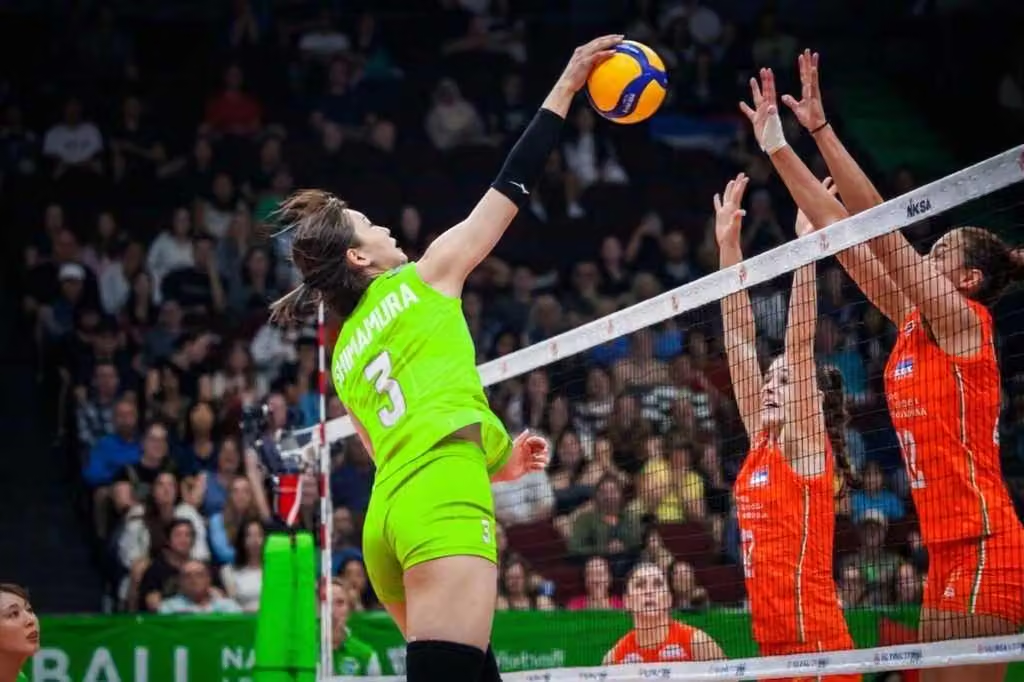
An outside hitter, also called a left-side hitter, is an attacking player who usually attacks from the left side of the volleyball court. This position is one of the most versatile roles on a volleyball team.
Outside hitters are expected to contribute to both offense and defense. They attack balls from the front row, receive serves, pass the ball, and help defend against opposing attacks.
Because outside hitters often receive a large number of sets, they need to be consistent, adaptable, and comfortable attacking different types of balls.
Main Responsibilities of an Outside Hitter
An outside hitter has several important responsibilities:
1. Attacking from the Left Side
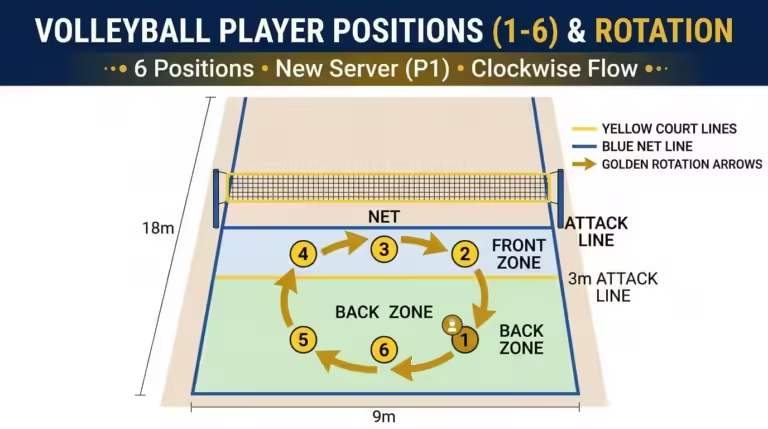
The outside hitter usually attacks from position 4, which is the left-front area of the court. They must develop strong hitting techniques to attack cross-court, down the line, and into open spaces.
2. Serve Reception
Outside hitters frequently participate in serve-receive formations. They need excellent passing skills to control the opponent’s serve and help the setter create attacking opportunities.
3. Blocking
When playing in the front row, outside hitters help block opposing attackers, especially the opponent’s right-side hitter.
4. Back-Row Defense
When rotating into the back row, outside hitters contribute to digging and defensive coverage. They may also attack from behind the three-meter (10-foot) line.
5. Supporting Team Communication
Outside hitters communicate with setters, middle blockers, and teammates to coordinate attacks, passing responsibilities, and defensive coverage.
Important Skills for an Outside Hitter
To become a successful outside hitter, focus on developing these skills:
- Strong and consistent spiking technique.
- Accurate serve reception and passing.
- Good jumping ability and timing.
- Effective blocking techniques.
- Quick footwork and court awareness.
- Communication and teamwork.
- Ability to attack difficult or imperfect sets.
An outside hitter needs to be an all-around player who can contribute in multiple areas of the game.
What Is an Opposite Hitter in Volleyball?
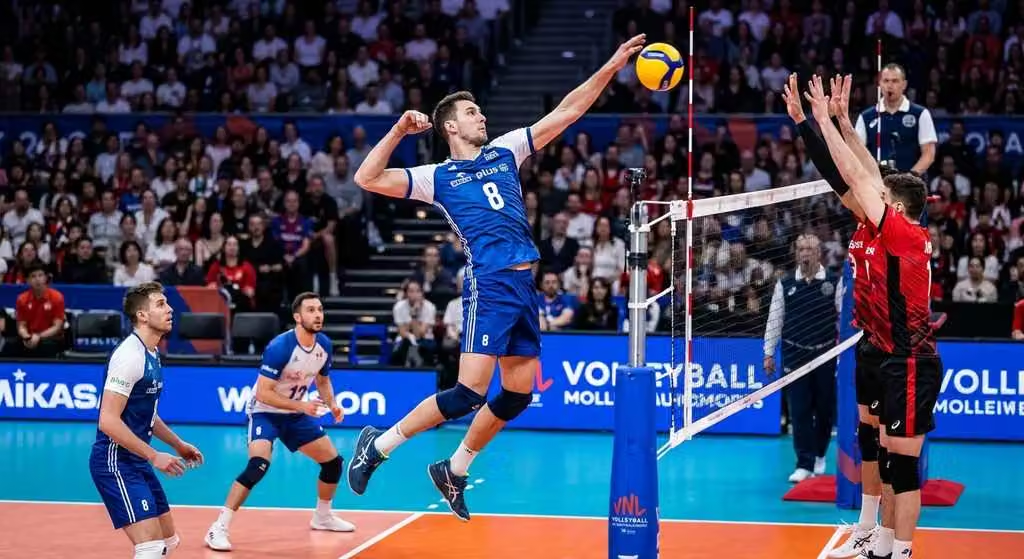
An opposite hitter, also known as a right-side hitter, is an attacking player who usually attacks from the right side of the volleyball court.
The opposite hitter plays opposite the setter in the team’s rotational lineup. This player is an important offensive option and often takes responsibility for attacking from the right side.
Unlike outside hitters, opposite hitters generally have a stronger focus on attacking and blocking. Depending on the team’s system, they may also contribute to serve reception, but many teams assign them fewer passing responsibilities.
Main Responsibilities of an Opposite Hitter
1. Attacking from the Right Side
Opposite hitters usually attack from position 2, the right-front area of the court. They need to attack effectively against the opposing team’s outside hitter and middle blocker.
2. Blocking the Opponent’s Outside Hitter
One of the most important defensive responsibilities of an opposite hitter is blocking the opponent’s outside hitter. They must develop good timing, positioning, and hand placement.
3. Back-Row Attacking
When rotating into the back row, opposite hitters can attack from behind the three-meter line, often from the right-back area.
4. Defensive Coverage
Opposite hitters help defend against attacks and cover teammates during offensive plays.
5. Supporting the Setter
Because the opposite hitter is positioned opposite the setter in the rotation, this player often provides an important attacking option when the setter is in the front row.
Important Skills for an Opposite Hitter
A successful opposite hitter should develop:
- Powerful and accurate spiking.
- Strong right-side attacking techniques.
- Effective blocking and timing.
- Good jumping ability.
- Fast reaction and defensive skills.
- Strong court awareness.
- Ability to attack against well-organized blocks.
Opposite hitters benefit from being powerful attackers who can also contribute significantly to the team’s blocking game.
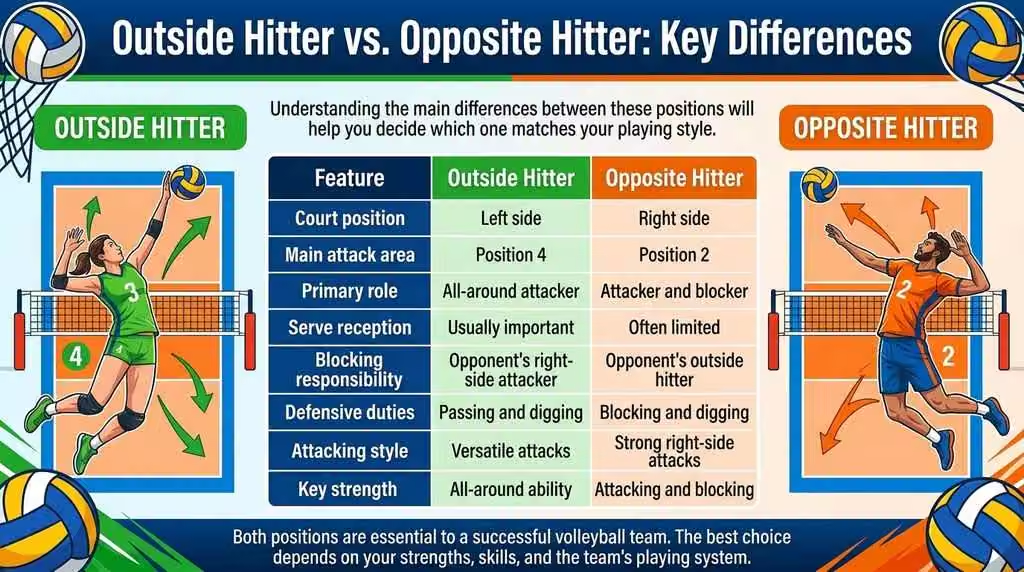
Outside Hitter vs. Opposite Hitter: Key Differences
Understanding the main differences between these positions will help you decide which one matches your playing style.
| Feature | Outside Hitter | Opposite Hitter |
|---|---|---|
| Court position | Left side | Right side |
| Main attack area | Position 4 | Position 2 |
| Primary role | All-around attacker | Attacker and blocker |
| Serve reception | Usually important | Often limited |
| Blocking responsibility | Opponent’s right-side attacker | Opponent’s outside hitter |
| Defensive duties | Passing and digging | Blocking and digging |
| Attacking style | Versatile attacks | Strong right-side attacks |
| Key strength | All-around ability | Attacking and blocking |
Both positions are essential to a successful volleyball team. The best choice depends on your strengths, skills, and the team’s playing system.
Which Position Has More Attacking Opportunities?
Both outside hitters and opposite hitters can be major scoring options, but their attacking opportunities depend on the team’s offensive system.
Outside hitters often receive sets from the left side, including high balls during difficult situations when the team needs a reliable attacking option.
Opposite hitters receive sets from the right side and may become particularly important when the setter is in the front row and has fewer front-row attacking options available.
In many teams, both positions receive a significant number of attacking opportunities. Neither position automatically guarantees more attacks. Official volleyball rules: FIVB Official Volleyball Rules 2025–2028
Which Position Requires Better Passing Skills?
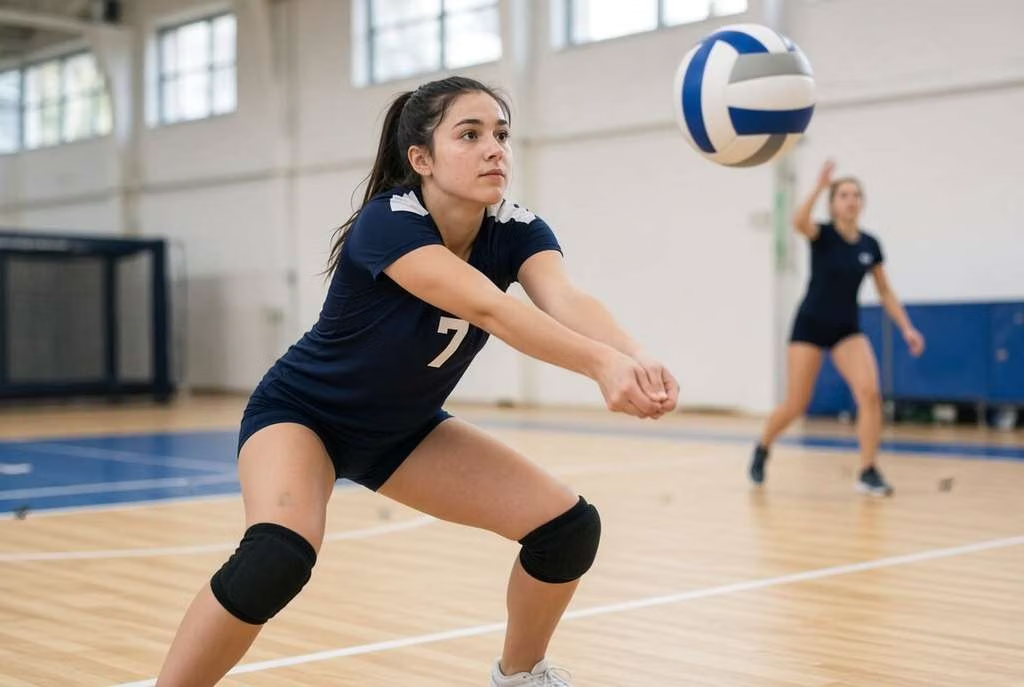
Passing is generally a more important responsibility for outside hitters.
Outside hitters frequently participate in serve-receive formations and must control difficult serves. Their passing ability helps the setter deliver accurate sets to attackers.
Opposite hitters may also need passing skills, but many teams use them primarily as attackers and blockers. Their serve-receive responsibilities depend on the coach’s tactical system.
Winner for passing: Outside hitter.
If you enjoy receiving serves, controlling the ball, and contributing to different parts of the game, the outside hitter position may suit you.
Which Position Is Better for Blocking?
Both positions play important roles in blocking, but their responsibilities are different.

Outside hitters usually block the opponent’s opposite hitter or right-side attacker.
Opposite hitters generally block the opponent’s outside hitter. This can be challenging because outside hitters often receive many attacking opportunities.
Opposite hitters must learn to read the setter, position themselves correctly, and coordinate their block with the middle blocker.
Winner for right-side blocking responsibility: Opposite hitter.
If you enjoy blocking and stopping powerful attacks from the opposing team’s outside hitter, the opposite position may be a good fit.
Physical Requirements: Outside Hitter vs. Opposite Hitter
Both positions benefit from strength, speed, coordination, and jumping ability. However, the physical demands can vary depending on the team’s playing style.
Physical Requirements for Outside Hitters
Outside hitters benefit from:
- Good jumping ability for attacking and blocking.
- Quick movement for serve reception.
- Strong shoulders and arms for hitting.
- Good balance and body control.
- Endurance for playing multiple roles.
- Fast reactions for defensive coverage.
Physical Requirements for Opposite Hitters
Opposite hitters benefit from:
- Explosive jumping power.
- Strong attacking ability.
- Good upper-body strength.
- Effective lateral movement for blocking.
- Quick reactions at the net.
- Strong coordination and timing.
Remember that height and jumping ability can be advantages, but they are not the only factors that determine success. Technique, positioning, timing, and decision-making are equally important.
Which Position Is Better for Beginners?
If you are new to volleyball, you might wonder whether you should start as an outside hitter or an opposite hitter.
Both positions can help you develop important volleyball skills, but the outside hitter position often provides more opportunities to practice different parts of the game. Improve your overall volleyball skills with our Volleyball Weekly Training Program for Beginners.
As an outside hitter, you can improve your:
- Passing and serve reception.
- Attacking techniques.
- Blocking fundamentals.
- Defensive movement.
- Communication and teamwork.
The opposite hitter position is also a good choice if you enjoy attacking from the right side and developing strong blocking skills.
However, beginners should not rush into choosing only one position. Learning basic volleyball skills across multiple positions can help you become a more complete player.
Beginner recommendation: Try both positions during practice before deciding which one fits your strengths and interests.
How to Choose Between Outside Hitter and Opposite Hitter
Choosing between these two positions depends on your natural abilities, interests, and the skills you want to develop.
Here are some questions to help you make your decision.
Choose Outside Hitter If:
- You enjoy passing and receiving serves.
- You like attacking from the left side.
- You want to participate in both offense and defense.
- You have good ball control and court awareness.
- You enjoy being involved in different parts of the game.
Choose Opposite Hitter If:
- You enjoy powerful attacks from the right side.
- You prefer focusing on attacking and blocking.
- You have good jumping ability.
- You enjoy challenging opposing outside hitters.
- You want to develop strong right-side attacking skills.
Neither position is universally better. A good volleyball player succeeds by understanding their role and helping the team.
Can an Outside Hitter Play as an Opposite Hitter?
Yes! An outside hitter can play as an opposite hitter, and an opposite hitter can also learn to play as an outside hitter.
Both positions require attacking, blocking, jumping, and defensive awareness. However, players need to adjust their positioning, approach angles, responsibilities, and court awareness when switching roles.
For example, an outside hitter moving to the opposite position needs to become comfortable attacking from the right side and blocking the opposing outside hitter.
Learning both positions can make players more versatile and valuable to their teams.
Training Tips to Improve Both Positions
Whether you choose outside hitter or opposite hitter, consistent practice is essential for improving your performance.
Here are six useful training tips:
1. Practice Your Spiking Technique
Work on your approach, arm swing, timing, and contact point. Practice hitting cross-court and down-the-line shots.
2. Improve Your Vertical Jump
Include appropriate jump-training exercises to develop explosive power. Squats, lunges, calf raises, and progressive plyometric exercises can support your jumping ability.
3. Develop Better Blocking Skills
Practice your blocking footwork, hand positioning, timing, and ability to read the opponent’s attack.
4. Improve Your Ball Control
Practice passing, digging, and controlling difficult balls. These skills are particularly important for outside hitters.
5. Practice Position-Specific Attacks
Outside hitters should practice attacking from the left antenna, while opposite hitters should practice attacking from the right antenna.
6. Watch and Learn From Experienced Players
Observe how experienced players approach the net, read blockers, adjust their attacks, and communicate with teammates.
For more training ideas, explore these related guides on BeginnerVolleyball.com:
- Volleyball Practice Plans for Beginners
- Plyometric Training for Volleyball Players
- Strength Training for Volleyball Players
Frequently Asked Questions (FAQs)
1. Is an outside hitter better than an opposite hitter?
Neither position is automatically better. Outside hitters contribute through attacking, passing, and defense, while opposite hitters often focus more on attacking and blocking. The best position depends on your abilities and the team’s needs.
2. Which position is harder in volleyball?
Both positions have different challenges. Outside hitters must manage serve reception, attacking, and defense. Opposite hitters face demanding blocking responsibilities and need consistent attacking skills.
3. Are outside hitters and opposite hitters both attackers?
Yes. Both positions are important attacking roles. Outside hitters generally attack from the left side, while opposite hitters usually attack from the right side.
4. Do opposite hitters receive serves?
They can, depending on the team’s serve-receive system. However, many teams assign more serve-receive responsibilities to outside hitters and libero players.
5. Which position needs more jumping ability?
Both positions benefit from strong jumping ability. Opposite hitters often need explosive jumps for right-side attacking and blocking, while outside hitters also need good vertical power for attacking and defense. Build stronger muscles and improve your performance with our Strength Training for Volleyball Players.
6. Can a beginner become an outside hitter?
Absolutely! Beginners can develop into outside hitters by practicing passing, serving, spiking, blocking, and defensive skills.
7. What position is number 4 in volleyball?
Position 4 is the left-front position, where outside hitters commonly attack. It is located near the left antenna at the net.
8. What position is number 2 in volleyball?
Position 2 is the right-front position, where opposite hitters commonly attack. It is located near the right antenna at the net.
Conclusion: Outside Hitter vs. Opposite Hitter – Which Should You Choose?
When comparing outside hitter vs. opposite hitter, the biggest difference is their court position and responsibilities.
Outside hitters are versatile players who contribute to passing, attacking, blocking, and defense. Opposite hitters focus more on right-side attacking and blocking while supporting the team’s defensive system.
If you enjoy an all-around role and want to participate in different aspects of volleyball, outside hitter may be the better choice. If you enjoy powerful attacks from the right side and challenging opponents at the net, opposite hitter may suit you better.
Remember, the best volleyball position is the one that matches your strengths, interests, and willingness to improve. Practice both positions, develop your fundamentals, and discover where you can make the biggest contribution to your team.
Keep practicing, stay confident, and enjoy learning volleyball!