
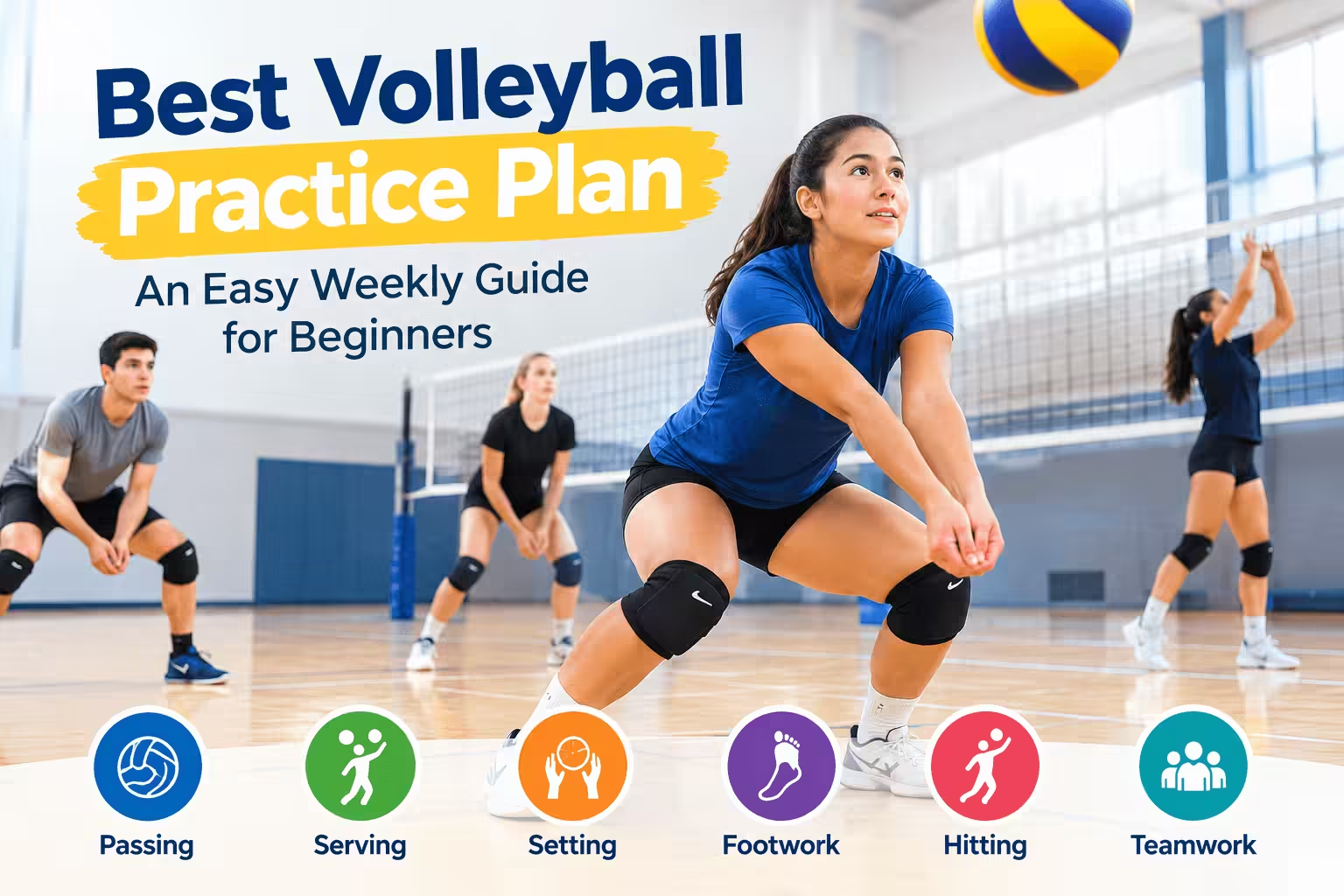
Follow the best volleyball practice plan for beginners to improve serving, passing, setting, footwork, and teamwork with an easy weekly training schedule.Learning volleyball takes time, patience, and consistent practice. Whether you are a complete beginner or a recreational player who wants to improve, following a structured volleyball practice plan can help you develop essential skills, build confidence, and understand the game more effectively.
Instead of practicing random drills without a clear goal, a weekly schedule allows you to focus on specific skills such as serving, passing, setting, hitting, footwork, and communication. You can track your progress, identify weaknesses, and gradually improve your performance.
In this guide, you will learn how to create a volleyball training routine, follow a simple weekly practice schedule, and choose effective drills for individual or team training. The plan is designed for beginners and can be adjusted to suit your available time, fitness level, and access to a volleyball court.
Why Do You Need a Volleyball Practice Plan?
A well-organized volleyball practice routine gives every training session a purpose. It helps you spend more time developing important skills instead of repeating exercises without knowing what you want to achieve.
Here are some benefits of following a structured plan:
- Improves fundamental skills: Regular practice helps you develop better serving, passing, setting, and attacking techniques.
- Builds consistency: Repeating the correct movements helps you perform skills more confidently during games.
- Develops physical fitness: Volleyball drills can improve agility, coordination, balance, and general fitness.
- Strengthens teamwork: Team practice encourages communication, cooperation, and better court awareness.
- Tracks progress: Setting simple goals makes it easier to recognize improvements and identify areas that need attention.
- Reduces unnecessary fatigue: Planning your training sessions allows you to balance demanding practices with recovery.
Beginners do not need to practice for several hours every day. Short, focused sessions with proper technique and enough recovery can be more useful than long sessions without a clear structure.
How Long Should a Volleyball Practice Session Last?
The ideal session length depends on your experience, fitness level, and training goals. Beginners can start with approximately 30–60 minutes per session and gradually increase the duration as their skills and endurance improve.
A typical 60-minute practice session might include the following activities.
| Training activity | Duration |
|---|---|
| Warm-up and mobility | 10 minutes |
| Ball-control drills | 10 minutes |
| Main skill practice | 20 minutes |
| Movement and game situations | 10 minutes |
| Cool-down and review | 10 minutes |
You can adjust this schedule depending on the skill you want to improve. For example, a serving-focused session may include more time for serving accuracy, while a team session may devote additional time to communication and game play.
A 7-Day Volleyball Practice Plan for Beginners
This weekly volleyball practice plan divides training into manageable sessions. Each day has a specific focus so you can develop your skills without trying to improve everything at once.

Day 1: Passing and Ball Control
35–50 minutes
Practice your ready position, forearm passing, and ball control. Start with easy tosses and gradually work on directing the ball toward a target.
- Forearm passing against a wall: 3 sets of 10 repetitions
- Partner passing: 3 sets of 10 controlled passes
- Ready-position and shuffle drill: 3 rounds

Day 2: Serving Technique
30–45 minutes
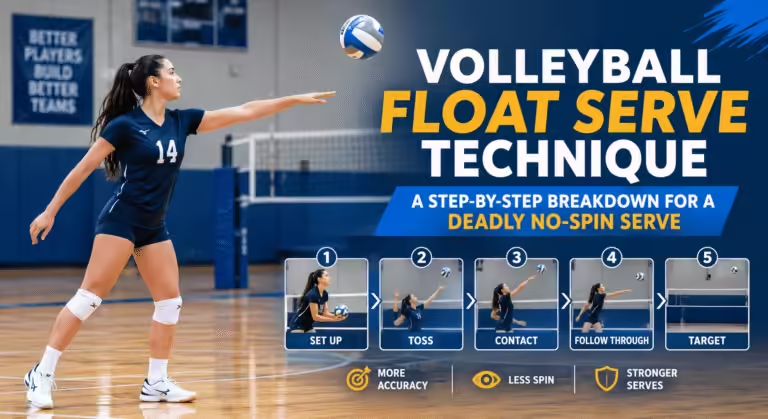
Work on your ball toss, contact point, balance, and serving accuracy. Begin with the underhand serve if you are still learning the basics.
- Underhand serve practice: 3 sets of 8 serves
- Overhand serving technique: 2 sets of 5 controlled attempts, if comfortable
- Target-serving drill: 10 attempts

Day 3: Setting and Ball Control
30–45 minutes
Learn to position your hands correctly and control the ball using your fingers. Focus on body positioning and a consistent release.
- Self-setting: 3 sets of 10 repetitions
- Wall setting: 3 sets of 10 repetitions
- Partner setting: 3 sets of 10 repetitions

Day 4: Footwork and Defense
25–40 minutes
Practice moving quickly while staying balanced. Learn to shuffle sideways, move forward and backward, and get into position before contacting the ball.
- Lateral shuffle: 3 rounds of 20 seconds
- Ready-position reaction drill: 3 rounds
- Controlled defensive digging: 3 sets of 8 repetitions

Day 5: Attacking and Hitting Fundamentals
30–45 minutes
Focus on approach steps, arm swing mechanics, timing, and controlled contact. Beginners can practice without jumping before adding more demanding movements.
- Approach footwork without a ball: 3 sets of 5 repetitions
- Standing arm swings: 3 sets of 8 repetitions
- Controlled hitting against a suitable target: 10 attempts

Day 6: Teamwork and Game Practice
40–60 minutes
Combine your skills in partner drills, cooperative rallies, or small-sided games. Practice calling the ball, moving into position, and communicating with teammates.
- Pass-set-hit sequence: 10 controlled repetitions
- Three-touch cooperative rallies: 10–15 minutes
- Small-sided game practice: 15–20 minutes

Day 7: Rest and Recovery
Rest day
Give your body time to recover from the week’s training. You can take a gentle walk or perform comfortable mobility exercises if you wish.
- Review your practice notes
- Identify one skill to improve next week
- Prepare your goals for the next training cycle
Beginner tip: You do not have to train hard on six consecutive days. If you are new to exercise, start with three or four practice days, use the other days for rest or light activity, and increase your workload gradually.
Essential Volleyball Drills to Include in Your Practice
The best drills develop skills you can use during real matches. Start with simple movements and increase the difficulty only when you can perform them with control.
1. Forearm Passing Drill
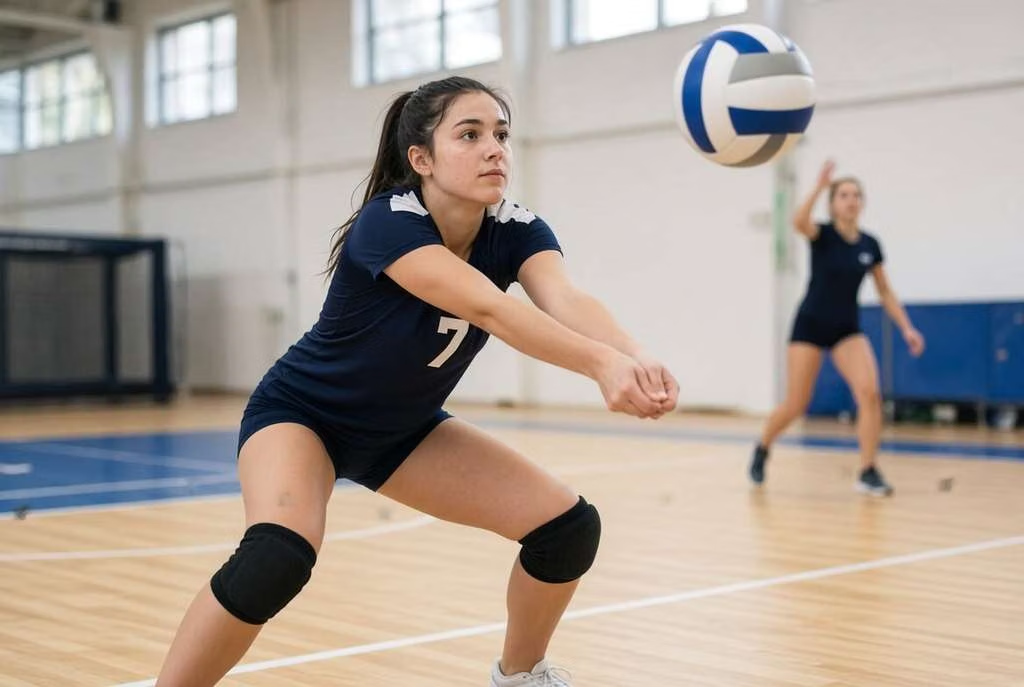
Passing is one of the most important skills in volleyball because it helps your team control the first contact and organize an attack.
How to practice:
- Stand with your feet about shoulder-width apart.
- Bend your knees slightly and lean forward.
- Join your hands and keep your forearms together.
- Contact the ball on your forearms rather than swinging your arms excessively.
- Direct the ball toward a partner or target using controlled movement from your legs and body.
Practice with gentle tosses first. Focus on passing accuracy instead of trying to hit the ball as hard as possible.
2. Volleyball Serving Accuracy Drill
Serving allows you to start the rally and put pressure on the opposing team. A reliable serve is often more useful to a beginner than a powerful serve that frequently goes out of bounds.
How to practice:
- Begin at a comfortable serving distance.
- Choose a target area on the opposite court.
- Use a consistent starting position and ball toss.
- Serve toward your chosen target.
- Record how many attempts land in the intended area.
Start with 10 serves and count your successful attempts. As your control improves, gradually increase the distance or choose smaller target areas.
3. Wall Setting Drill
Wall setting helps beginners practice hand positioning, touch, and ball control without needing a partner.
How to practice:
- Stand a safe distance from a suitable wall.
- Position your hands above your forehead with your fingers naturally spread.
- Push the ball upward using your fingers and coordinated arm movement.
- Set the returning ball again while maintaining a balanced stance.
- Try to keep the ball at a consistent height.
Begin with short sets of repetitions and prioritize clean technique. Stop if your fingers or wrists become uncomfortable.
4. Volleyball Footwork Drill
Good footwork helps players reach the ball early and maintain balance before making contact.
How to practice:
- Start in a ready position.
- Shuffle two or three steps to the right.
- Return to the middle.
- Shuffle to the left.
- Repeat while keeping your body balanced and your eyes forward.
Perform three short rounds with adequate rest. As your coordination improves, ask a partner to point in different directions so you can react to visual cues.
5. Partner Pass-Set Drill
This drill combines two fundamental skills and helps you develop control during a rally.
How to practice:
- Stand several feet away from a partner.
- Begin with a gentle toss.
- Pass the ball toward your partner.
- Have your partner set the ball back to you.
- Repeat while aiming for consistent height and placement.
Once both players feel comfortable, increase the distance slightly or try to maintain a longer cooperative rally.
For more practice ideas, read our guide to volleyball serving drills for beginners and explore different exercises that develop serving accuracy and consistency.
How to Create a Personalized Volleyball Training Routine
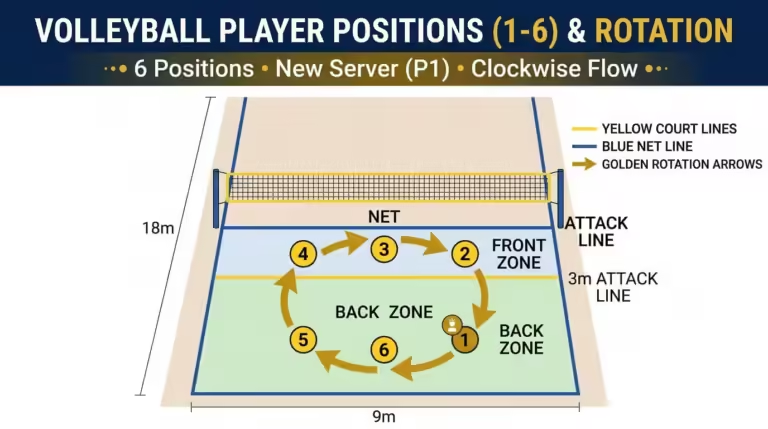
A weekly schedule provides a useful starting point, but the best routine is one you can follow consistently. Adjust the number of sessions, drill difficulty, and practice duration to match your needs. For more ideas to improve your training sessions, explore these volleyball coaching drills and practice ideas from USA Volleyball. You can also review the basic volleyball rules for beginners published by the FIVB to better understand gameplay, scoring, and team rotations. Combining structured practice with a clear understanding of the rules can help you prepare more effectively for your next game.
Set One or Two Clear Goals
Choose specific goals instead of trying to improve every skill in a single session.
Examples include:
- Improve forearm passing accuracy.
- Develop a more consistent underhand serve.
- Complete more controlled wall-setting repetitions.
- Move into a balanced defensive position more quickly.
- Communicate earlier during team rallies.
Write down your goals before each practice. This helps you focus on the skills that matter most.
Balance Skill Practice and Physical Conditioning
Volleyball requires coordination, movement, jumping ability, and muscular endurance. However, beginners should establish good movement patterns before adding challenging conditioning exercises.
Your routine can include:
- Bodyweight squats for lower-body strength.
- Calf raises for lower-leg strength.
- Planks for core stability.
- Short lateral movements for agility.
- Gentle mobility exercises to support comfortable movement.
Start with manageable amounts and use proper technique. For additional ideas, see our guide to strength training for volleyball players.
Track Your Progress After Every Session
A training log helps you identify improvements over time.
Record the following information after practice:
| Item | What to record |
|---|---|
| Practice duration | Total minutes trained |
| Main skill | Serving, passing, setting, or footwork |
| Drill results | Successful attempts or controlled repetitions |
| Challenges | One technique that needs more work |
| Next goal | One specific target for the next session |
For example, if you successfully land 5 out of 10 serves in your chosen target area, use that result as a baseline. Repeat the drill during a future session and compare your performance under similar conditions.
Focus on steady progress rather than expecting perfect results after one practice.
Common Volleyball Practice Mistakes to Avoid
Even a well-designed volleyball practice plan can be less effective if you develop poor habits. Watch out for these common mistakes.
1. Practicing without warming up. Start with light movement and dynamic mobility before demanding drills. This prepares your body for activity.
2. Focusing only on power. Strong serves and hard attacks are useful, but accuracy, timing, and ball control are essential foundations.
3. Repeating incorrect techniques. Slow down when a movement feels awkward. Ask a coach or experienced player for feedback when possible.
4. Ignoring footwork. Good positioning makes passing, setting, and attacking easier. Include movement drills in your weekly schedule.
5. Training through pain. Stop or modify an exercise if you experience sharp pain, dizziness, or unusual discomfort. Allow time for recovery when needed.
6. Skipping rest days. Your body needs time to adapt to training. Schedule lighter days and rest when fatigue affects your movement or technique.
7. Forgetting communication. Volleyball is a team sport. Practice calling the ball, communicating your intentions, and supporting your teammates during drills.
Avoiding these mistakes helps you develop more consistent habits and make better use of each practice session.
Volleyball Practice Equipment for Beginners
You can improve your volleyball skills with basic equipment. You do not need an expensive training setup to get started.
Consider these useful items:
- Volleyball: Choose a ball suitable for your age, experience, and practice environment.
- Volleyball net: A properly installed net helps you practice serving, setting, attacking, and team drills.
- Cones or floor markers: Use them to create serving targets and footwork stations.
- Volleyball knee pads: These are optional but can improve comfort when practicing on suitable indoor courts.
- Rebounder or training net: A suitable rebounder can help you practice ball control when a partner is unavailable.
- Comfortable athletic shoes: Wear shoes appropriate for the playing surface to support movement and traction.
If you train alone, a wall, a volleyball, and a safe practice area may be enough for many beginner drills. Always check that your practice space is clear of windows, furniture, and other hazards.
How to Make Progress Over Four Weeks
After learning the basic drills, follow a simple four-week progression. Repeat the weekly schedule while gradually adjusting your goals.
Week 1: Learn the Fundamentals
Foundation
Practice basic passing, serving, setting, and ready-position techniques. Work slowly and prioritize control.
Week 2: Improve Consistency
Repeat your main drills and record your results. Aim for more accurate contacts and fewer unnecessary errors.
Week 3: Add Movement
Combine footwork with ball-control drills. Practice moving to the ball, regaining balance, and preparing for the next contact.
Week 4: Combine Skills
Practice passing, setting, and attacking in sequence. Play cooperative rallies or small-sided games to apply your skills under realistic conditions.
Progress at a pace that suits your ability. If a technique is still difficult, repeat the earlier drills before increasing the challenge. The goal is to develop reliable fundamentals, not to rush through a schedule.
Frequently Asked Questions About a Volleyball Practice Plan
How many days a week should a beginner practice volleyball?
Beginners can start with three or four practice sessions per week, depending on their fitness, schedule, and recovery. Shorter sessions focused on technique are a useful starting point. Adjust the schedule if you experience excessive fatigue or discomfort.
What should a volleyball practice include?
A balanced session should include a warm-up, fundamental skill drills, movement practice, and a brief review. Depending on your goals, you can focus on serving, passing, setting, hitting, blocking, or teamwork.
Can I practice volleyball alone at home?
Yes. You can practice self-setting, controlled wall passing, footwork, serving mechanics without a ball, and approach steps. Make sure you have enough space and a suitable wall or practice area. Avoid hitting a ball near fragile objects or people.
Read our guide to how to practice volleyball alone at home for more individual training ideas.
How long does it take to improve volleyball skills?
Improvement varies according to your starting ability, practice quality, coaching, and consistency. You may notice progress in individual drills before you feel comfortable applying those skills in a game. Track your performance over several weeks rather than judging progress from one session.
Should I practice volleyball every day?
Daily hard training is not necessary for beginners. You can alternate focused skill sessions with lighter activity and rest. If you practice on consecutive days, vary the intensity and avoid repeatedly performing demanding movements when tired.
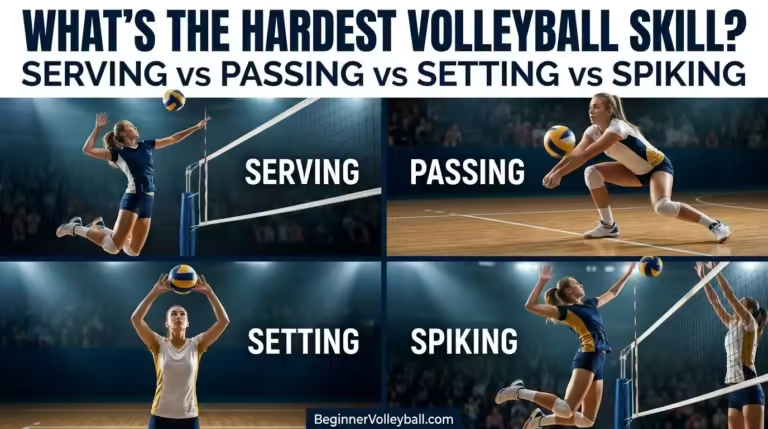
What is the most important volleyball skill for beginners?
Passing, serving, and setting are all important. Start with the skills needed for your role and current level, while building a foundation in movement and communication. Consistent ball control helps you participate more confidently in team drills and games.
Final Thoughts
A practical volleyball practice plan helps beginners train with purpose, develop fundamental skills, and build confidence over time. By organizing your week around passing, serving, setting, footwork, attacking, and teamwork, you can improve steadily without making every session overly complicated.
Start with manageable practice sessions, focus on correct technique, and record your results. Remember that rest and recovery are part of effective training, not wasted time.
Choose one skill to work on during your next practice, follow the weekly schedule, and adjust it as you improve. With patience and consistent effort, you can build the foundation needed to enjoy volleyball and become a more confident player.


One Comment