High school volleyball for beginners can seem challenging at first, but learning the basic rules, positions, and techniques makes the game easier to understand. Whether you are preparing for school volleyball tryouts or starting your first season, this guide will help you build confidence, improve your skills, and become a better team player.
Starting high school volleyball can be exciting, especially if you are learning the game for the first time. Whether you want to make your school team, improve your volleyball skills, or understand the rules before your first match, learning the fundamentals will help you feel more confident on the court.
High school volleyball combines teamwork, communication, athletic ability, and strategy. Players need to learn how to serve, pass, set, attack, block, and defend while understanding their positions and rotations.
In this beginner-friendly guide, you will learn the essential high school volleyball rules, player positions, court rotations, training tips, and equipment you need to get started.
1. High School Volleyball for Beginners: Getting Started
High school volleyball for beginners starts with learning the basic rules, understanding player positions, and practicing essential skills. New players should focus on serving, passing, setting, teamwork, and court movement before moving on to advanced techniques.
Indoor volleyball is usually played with six players on each team. Each player has specific responsibilities based on their position, skills, and the team’s strategy.
The main objective is to win rallies by grounding the ball on the opponent’s court, forcing a fault, or taking advantage of an opponent’s mistake.
High school volleyball is popular because it develops several important abilities, including:
- Teamwork and communication
- Speed, agility, and coordination
- Jumping ability and body control
- Decision-making under pressure
- Discipline and sportsmanship
You do not need to be an expert to start playing. Learning the fundamentals and practicing consistently can help you improve over time.
2. Basic High School Volleyball Rules
High school volleyball rules can vary depending on the competition and governing organization. For more detailed information, review the official high school volleyball rules published by the NFHS. You can also explore indoor volleyball rulebooks from USA Volleyball to better understand how the game is played.
How Many Players Are on a Volleyball Team?
Indoor volleyball is normally played with six players from each team on the court at a time.
The six rotational positions are numbered from 1 to 6:
- Position 1: Right back
- Position 2: Right front
- Position 3: Middle front
- Position 4: Left front
- Position 5: Left back
- Position 6: Middle back
Teams may have additional players on the bench who can enter the match through permitted substitutions.
How Does Scoring Work?
Most modern indoor volleyball matches use rally scoring. This means a point is awarded after every rally, regardless of which team served.
A common match format is best of five sets:
- The first four sets are generally played to 25 points.
- The fifth set, if necessary, is generally played to 15 points.
- A team must usually win a set by at least two points.
For example, if the score is 24–24 in a set played to 25, the teams continue until one team leads by two points, such as 26–24 or 27–25.
Important: Set targets, match formats, substitutions, and other rules depend on the governing association. Always check your school’s current competition rules.
How Many Times Can a Team Touch the Ball?
A team is generally allowed up to three team hits to return the ball over the net.
A typical sequence looks like this:
- Pass: A player receives the serve or a defensive ball.
- Set: A teammate positions the ball for an attack.
- Attack: A player sends the ball over the net.
A block touch does not count as one of the team’s three hits under standard indoor volleyball rules, so a team can generally make three additional contacts after a block touch.
What Is a Serve?
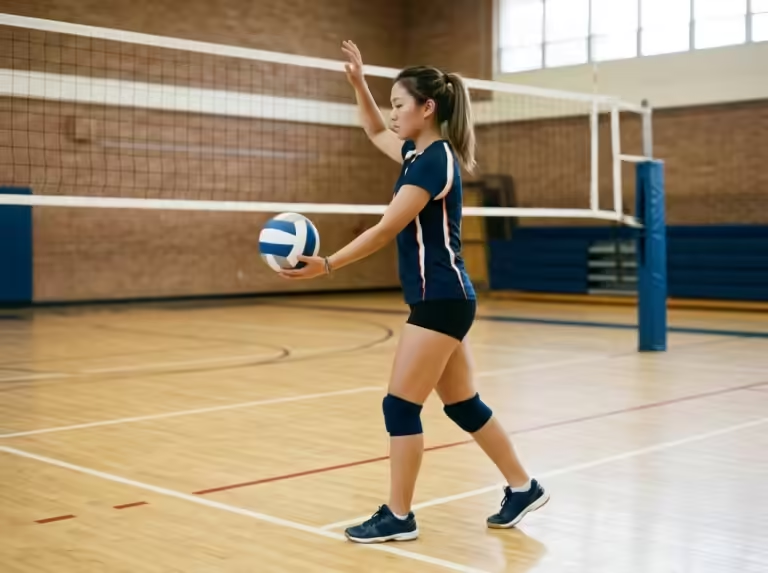
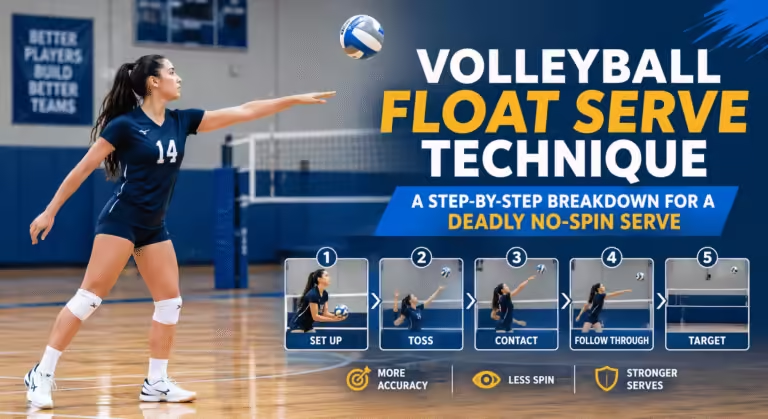
A serve starts the rally. The server stands behind the end line and sends the ball over the net into the opponent’s court.
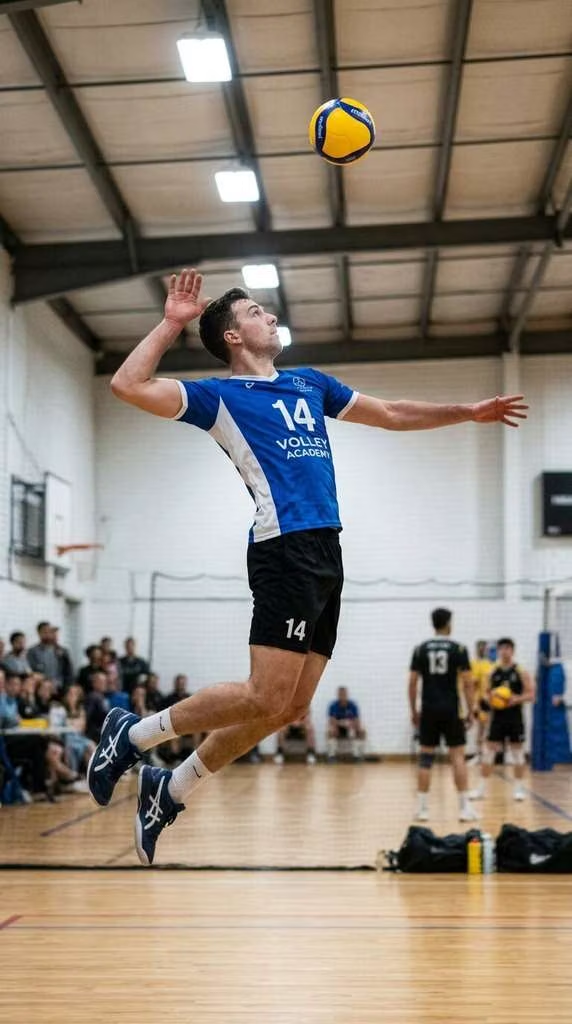
Beginners can start with an underhand serve before learning an overhand serve or jump serve.
A serve is unsuccessful if it commits a fault, such as failing to cross the net legally or landing outside the permitted court area without touching an opponent.
What Are Common Volleyball Faults?
Players should learn to recognize these common violations:
- Four hits: A team uses more than its permitted number of hits.
- Double contact: A player makes an illegal second contact with the ball.
- Lift or catch: A player holds, catches, or throws the ball instead of contacting it legally.
- Net fault: A player commits a prohibited action involving the net during play.
- Foot fault: A server steps on or over the end line before legally contacting the serve.
- Rotation fault: Players are not in the required rotational order at the time of service.
- Out of bounds: The ball lands outside the court without touching an opponent.
The exact application of some rules depends on the competition’s regulations. Learn the rules used by your school’s association before playing in an official match.
3. High School Volleyball Positions Explained
Understanding high school volleyball positions helps you discover your responsibilities and choose the role that best matches your abilities.
Indoor volleyball has six rotational positions, but players also specialize in roles such as setter, outside hitter, middle blocker, opposite hitter, and libero.
Setter
The setter is often called the team’s playmaker. This player usually takes the second contact and delivers an accurate ball to an attacker.
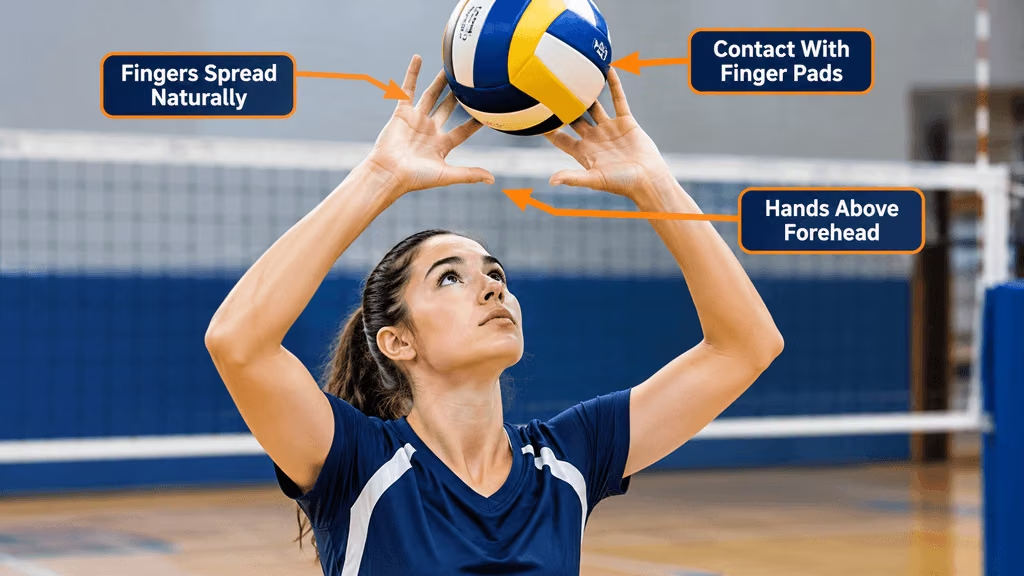
Main responsibilities:
- Set the ball for hitters.
- Make quick decisions about attacking options.
- Communicate with teammates.
- Help organize the team’s offense.
Setters benefit from good hand control, quick footwork, communication, and decision-making.
Outside Hitter
The outside hitter is an important attacking option and often helps with serve reception.
Main responsibilities:
- Attack from the left side of the net.
- Receive serves and pass defensive balls.
- Participate in blocking.
- Cover teammates during attacks.
Outside hitters benefit from a balanced combination of passing, attacking, and defensive skills.
Middle Blocker
The middle blocker focuses on blocking attacks near the center of the net and often performs quick attacks.
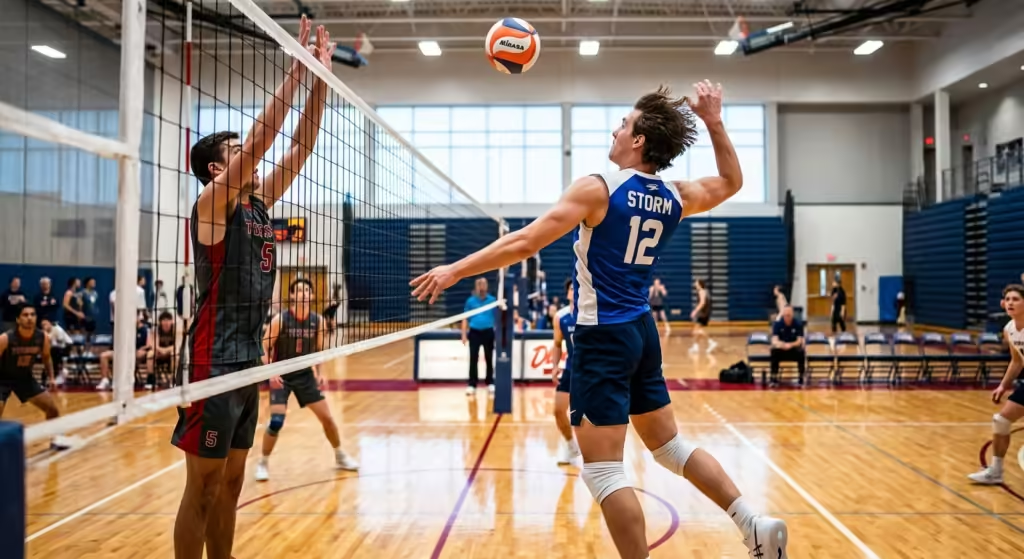
Main responsibilities:
- Block opposing hitters.
- Attack quick sets.
- Read the opposing setter.
- Move quickly along the net.
Jumping ability, timing, and fast lateral movement are particularly useful for this position.
Opposite Hitter
The opposite hitter usually attacks from the right side and often helps block the opposing outside hitter.
Main responsibilities:
- Attack from the right side.
- Block opposing attackers.
- Contribute to front-row and back-row offense.
- Help with defensive coverage.
The opposite position often suits players who can attack effectively and contribute to blocking.
Libero
The libero is a defensive specialist who wears a contrasting jersey in many competitions.
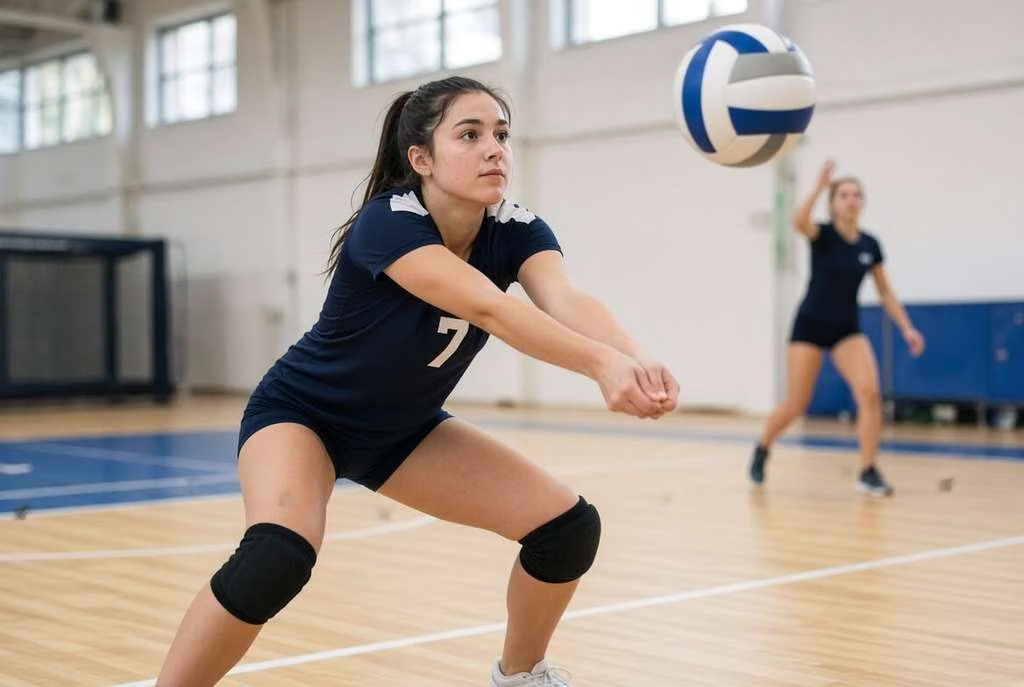
Main responsibilities:
- Receive serves.
- Dig hard-driven attacks.
- Improve ball control.
- Communicate with teammates during defense.
Liberos usually play in the back row and operate under special substitution and playing restrictions. Those restrictions vary by ruleset, so learn the rules used in your competition.
A libero does not normally specialize in front-row attacking or blocking.
Defensive Specialist
A defensive specialist focuses on passing, digging, and serve reception. Unlike a libero, this player generally follows the ordinary substitution rules of the competition.
Defensive specialists help teams maintain control when the opponent attacks aggressively.
Which Volleyball Position Is Best for Beginners?
There is no single best position for every beginner. Your ideal role depends on your interests, coordination, athletic strengths, and willingness to learn.
| Position | Useful strengths |
|---|---|
| Setter | Ball control and decision-making |
| Outside hitter | All-around skills and attacking |
| Middle blocker | Timing and jumping ability |
| Opposite hitter | Attacking and blocking |
| Libero | Quick reactions and defensive control |
| Defensive specialist | Passing and digging |
Try different skills during practice before deciding which position you prefer. Coaches may also assign positions based on the needs of the team.
4. Understanding Volleyball Rotations
Rotation is an essential part of learning high school volleyball. It determines where players must stand when their team gains the right to serve after receiving the opponent’s serve.
When a team wins the rally while receiving serve and gains the right to serve, its players rotate one position clockwise.
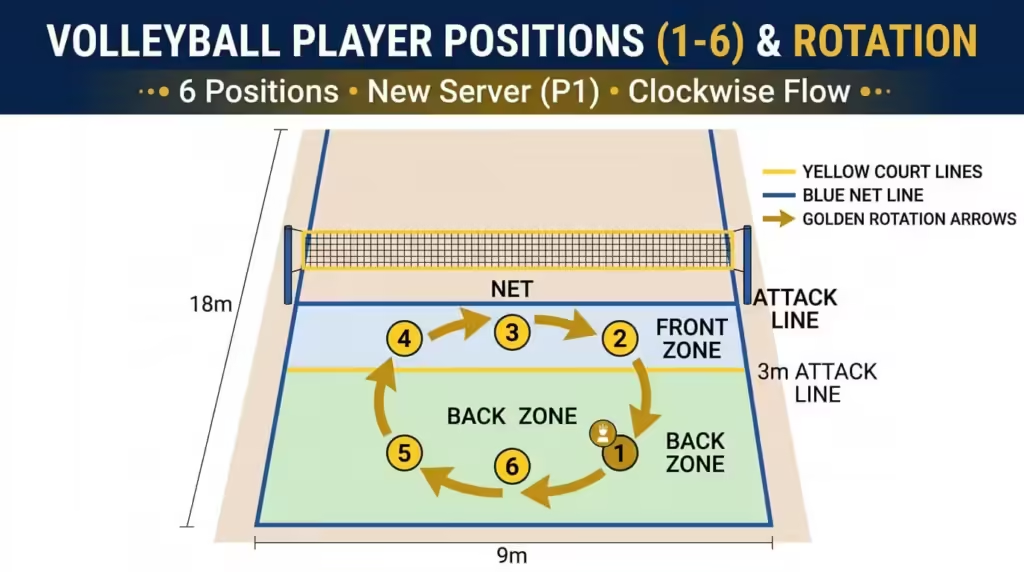
The rotational order is:
Position 1 → Position 6 → Position 5 → Position 4 → Position 3 → Position 2 → Position 1
Before the serve, players must maintain the required relative positions according to the rules. After the ball is legally served, they can generally move into their specialized playing roles.
Front-Row and Back-Row Players
The front row consists of positions 2, 3, and 4. These players are near the net and are primarily involved in attacking and blocking.
The back row consists of positions 1, 6, and 5. These players often focus on serving, serve reception, defense, and back-row attacks.
Back-row players must follow specific restrictions when attacking and blocking. Understanding these rules becomes especially important as you advance beyond beginner-level play.
Beginner tip: Practice rotation by placing six markers on the floor and moving through all six positions clockwise. This simple exercise makes the rotation order easier to remember.
5. Essential Volleyball Skills for Beginners
To succeed in high school volleyball, focus on developing the basic skills before attempting advanced techniques.
Passing
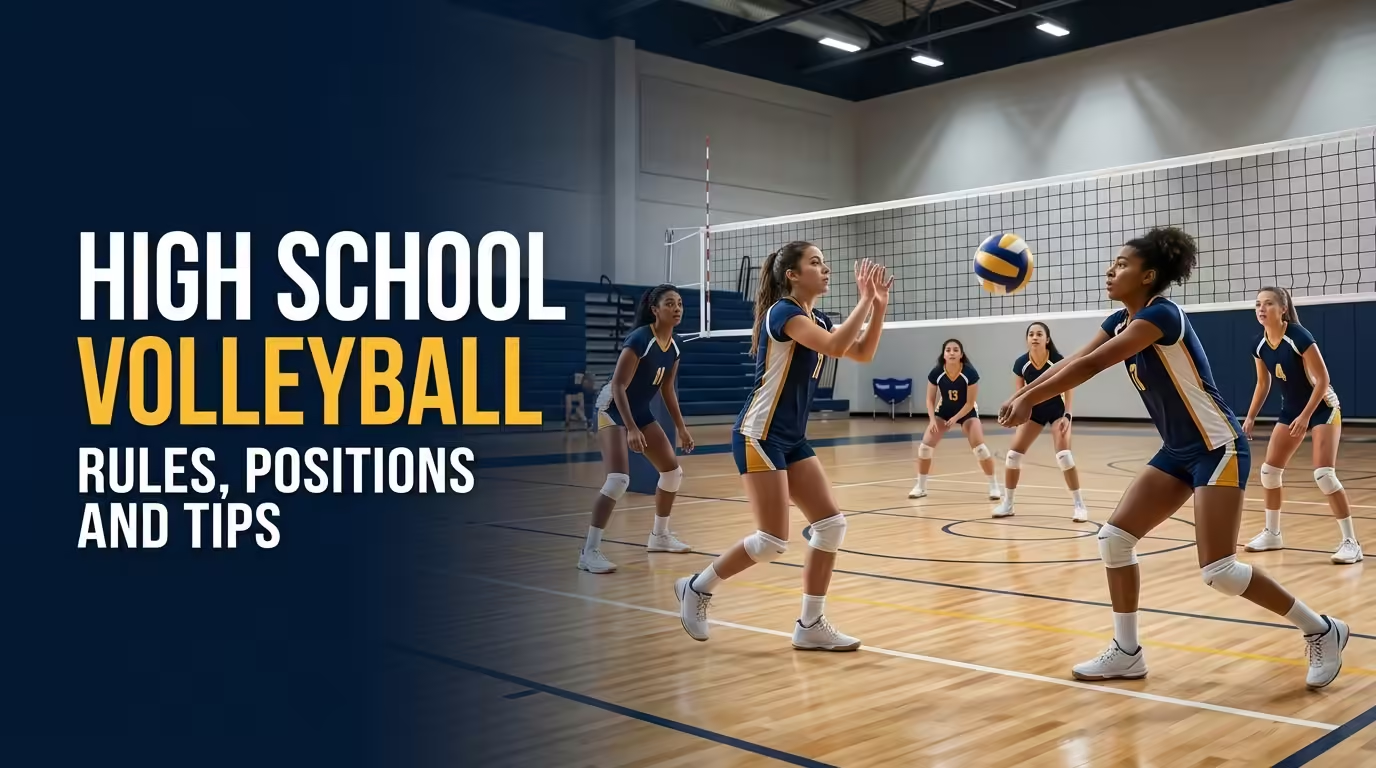
Passing is often the first contact after a serve. A controlled pass gives your team a better opportunity to organize an attack.
How to improve your passing:
- Keep your feet shoulder-width apart.
- Bend your knees and stay balanced.
- Bring your forearms together to create a stable platform.
- Contact the ball with your forearms rather than your hands.
- Direct the ball toward your setter.
Practice with a partner or against a wall when it is safe and permitted.
Setting
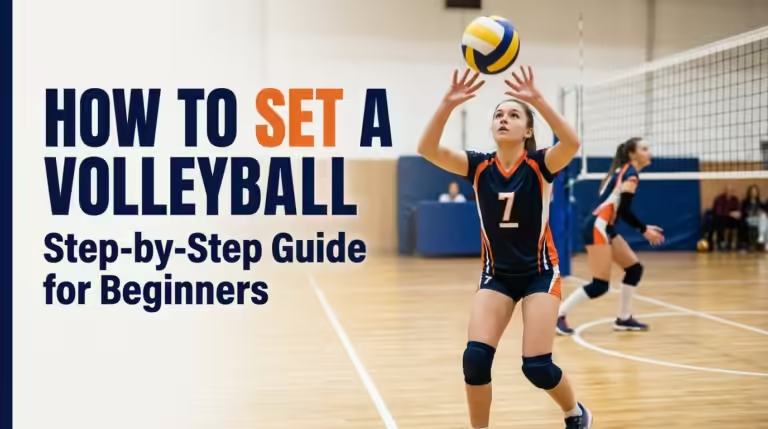
Setting is a controlled overhead contact used to position the ball for an attacker.
Beginner setting tips:
- Move your feet under the ball.
- Keep your hands relaxed and ready above your forehead.
- Use your fingers to contact the ball cleanly.
- Extend your arms and legs smoothly.
- Direct the ball toward a consistent target.
Avoid catching or holding the ball. Develop clean technique before focusing on speed.
Serving
Serving gives you the opportunity to start a rally and put pressure on the opposing team.
Start with an underhand serve if you are new to volleyball. Once you can serve consistently, work on your overhand technique.
Serving practice tips:
- Start behind the end line.
- Use a consistent ball toss or holding position.
- Contact the ball cleanly.
- Aim for a large, safe target area.
- Focus on accuracy before power.
Spiking
Spiking is an attacking skill used to send the ball into the opponent’s court with speed and direction.
Beginners should first learn the approach steps, arm swing, timing, and safe landing technique without rushing into maximum-power jumps.
Practice your approach and arm swing separately before combining them with a set ball.
Blocking
Blocking is a defensive action near the net used to stop or slow an opponent’s attack.
To improve blocking:
- Watch the opposing hitter and setter.
- Move along the net with controlled footwork.
- Jump at the right time.
- Reach upward with your hands positioned over the net when permitted.
- Land with control and avoid crossing into another player’s space.
Digging
Digging is a defensive skill used to keep an opponent’s attack from hitting the floor.
Stay balanced, react quickly, and keep your platform ready. Beginners should prioritize control and safe movement rather than diving for every ball.
6. How to Prepare for High School Volleyball Tryouts
High school volleyball tryouts can feel intimidating, particularly if you have limited experience. The good news is that you can prepare by practicing the fundamentals and building your fitness.
Improve Your Basic Skills
Spend time practicing serving, passing, setting, footwork, and defensive positioning. Consistency is more useful than attempting difficult techniques you cannot yet perform reliably.
Build Your Fitness Gradually
Volleyball involves short bursts of movement, jumping, changing direction, and recovering between rallies.
A beginner-friendly fitness routine may include:
- Bodyweight squats
- Calf raises
- Controlled lunges
- Short acceleration drills
- Side-to-side movement
- Core stability exercises
Start at a level appropriate for your current fitness and increase the difficulty gradually. Use proper technique and allow time for recovery.
Practice Communication
Coaches want players who communicate and work well with others.
Practice calling “Mine!” when appropriate, communicating before the serve, and supporting teammates after mistakes.
Show a Positive Attitude
During tryouts:
- Arrive on time and prepared.
- Listen carefully to coaching instructions.
- Work hard during drills.
- Encourage your teammates.
- Stay focused after mistakes.
- Ask respectful questions when you need clarification.
You do not have to be the strongest player at tryouts to demonstrate that you are coachable, committed, and willing to improve.
Bring the Right Equipment
Check with your coach about the required clothing and equipment. Athletic shoes designed for indoor court sports, comfortable sportswear, and knee pads can help you prepare for practice.
Bring water and any other items required by your school.
7. Best Practice Drills for High School Players
You can improve your volleyball skills with simple, structured drills. Always warm up before practice and use a safe training area.
Drill 1: Wall Passing
Goal: Improve forearm control and consistency.
Stand a comfortable distance from a wall and pass the ball against it. Try to maintain a steady rhythm while keeping your platform controlled.
Suggested practice: 3 rounds of 30–45 seconds.
Drill 2: Target Setting
Goal: Improve setting accuracy.
Choose a safe target, such as a marked area on a wall. Practice setting the ball toward the target while maintaining good hand position.
Suggested practice: 3 sets of 10–15 controlled repetitions.
Drill 3: Serving Accuracy
Goal: Improve serve consistency and placement.
Practice serving from behind the end line and aim for large target zones on the opposite court. Start with easier targets before attempting smaller ones.
Suggested practice: 15–25 serves, with a focus on technique and consistency.
Drill 4: Footwork and Agility
Goal: Improve movement and balance.
Practice short shuffles, controlled direction changes, and returning to a ready position. An agility ladder or floor markers can help organize the drill.
Suggested practice: 3–4 rounds of 20–30 seconds, with rest between rounds.
Drill 5: Partner Pepper
Goal: Develop ball control and coordination.
With a partner, alternate controlled passes, sets, and gentle attacks. Keep the ball moving while focusing on accuracy rather than power.
Suggested practice: 5–10 minutes.
Drill 6: Defensive Reaction
Goal: Improve readiness and defensive movement.
Have a partner gently toss the ball to different reachable areas. Move into position and return the ball with control.
Suggested practice: 3 rounds of 8–10 tosses.
Adjust the duration and number of repetitions to your fitness level. If you are practicing alone, wall passing and target setting are useful starting points.
8. Essential Volleyball Equipment for High School Players
You do not need expensive equipment to begin playing volleyball. Start with the basics and add training tools when they serve a clear purpose.
Volleyball
Choose a ball suitable for your age group and competition. A regulation indoor volleyball is generally used in high school matches, but check your school’s requirements.
Indoor Volleyball Shoes
Court shoes can provide traction, stability, and cushioning for frequent stops and direction changes. Choose a comfortable fit and use shoes appropriate for indoor courts.
Knee Pads
Knee pads can provide cushioning during floor defense and diving. Make sure they fit securely without restricting movement.
Volleyball Training Equipment
Training tools can help you practice specific skills outside team sessions.
Useful options include:
- Volleyball rebounder: Helps with solo passing and ball-control practice.
- Setter training net or target: Provides a target for practicing setting accuracy.
- Agility ladder: Helps structure footwork and movement drills.
- Resistance bands: Can be used for suitable strength and mobility exercises.
- Ball pump: Helps maintain appropriate ball pressure according to the manufacturer’s guidance.
When buying equipment, prioritize safety, durability, adjustability, and suitability for your available training space.
For more recommendations, read our guide to best volleyball training equipment for beginners.
Affiliate disclosure: This article may contain affiliate links. If you purchase through these links, we may earn a commission at no additional cost to you.
9. Common Mistakes Beginners Should Avoid
Learning what not to do is just as important as learning the correct techniques.
Trying to Hit Every Ball Too Hard
Power is not the most important skill for a beginner. Focus on accuracy, control, and consistent contact before increasing your hitting speed.
Standing Upright During Defense
A high, stiff posture can make it harder to react quickly. Stay balanced with your knees slightly bent and your weight ready to move.
Forgetting to Communicate
Players who stay silent may collide, leave balls unattended, or misunderstand who should make the next contact. Communicate clearly and early.
Ignoring Rotations
A player who does not understand rotation may cause a positional fault. Practice the six positions until you can identify them confidently.
Neglecting the Basics
It can be tempting to focus on jump serves and powerful spikes. However, reliable passing, serving, movement, and communication are essential to team success.
Training Without Enough Recovery
Too much jumping or intense practice without adequate recovery can increase the risk of injury. Build your training gradually, sleep well, stay hydrated, and tell a coach or trusted adult if you experience persistent pain.
10. Frequently Asked Questions About High School Volleyball
Is high school volleyball hard for beginners?
High school volleyball can be challenging because it requires coordination, communication, and teamwork. However, beginners can learn the fundamentals through regular practice, supportive coaching, and gradual skill development.
Can you make a high school volleyball team with no experience?
Yes, it may be possible, depending on the school, team level, and available places. Practicing basic skills, improving fitness, and showing a positive attitude can help you prepare for tryouts. Selection is never guaranteed.
What are the six positions in high school volleyball?
The six rotational positions are right back (1), right front (2), middle front (3), left front (4), left back (5), and middle back (6). These are court positions, not the same thing as specialized roles such as setter or libero.
How many points do you need to win a high school volleyball set?
A common format uses 25 points for the first four sets and 15 points for a deciding fifth set, with a two-point winning margin. Check your school’s governing rules because formats can vary.
What should I practice first as a beginner?
Start with serving, forearm passing, setting, ready position, footwork, and communication. These fundamentals provide a foundation for more advanced skills.
How often should a beginner practice volleyball?
The ideal frequency depends on your schedule, fitness, and recovery. Several manageable sessions per week can help you build consistency. Follow your coach’s plan and avoid increasing training volume too quickly.
What equipment do I need for high school volleyball?
Start with suitable athletic clothing, indoor court shoes, water, and any school-required protective equipment, such as knee pads. Your coach can advise you about the appropriate volleyball and other training tools.
11. Final Tips for New High School Volleyball Players
Learning high school volleyball takes time, but you do not need to master every skill before you begin. Focus on the fundamentals, understand your responsibilities on the court, and build confidence through consistent practice.
Remember these key points:
- Learn the basic rules and six rotational positions.
- Practice serving, passing, setting, and defensive movement.
- Communicate with teammates and listen to your coach.
- Prepare for tryouts by building your skills and fitness gradually.
- Use appropriate equipment and prioritize safe technique.
- Treat mistakes as opportunities to learn.
Your next step: Choose one skill you want to improve this week and practice it consistently. Small improvements in ball control, movement, and communication can make a real difference as you develop into a stronger volleyball player.
Keep practicing, stay patient, and enjoy the game!
Suggested related articles to link internally: