
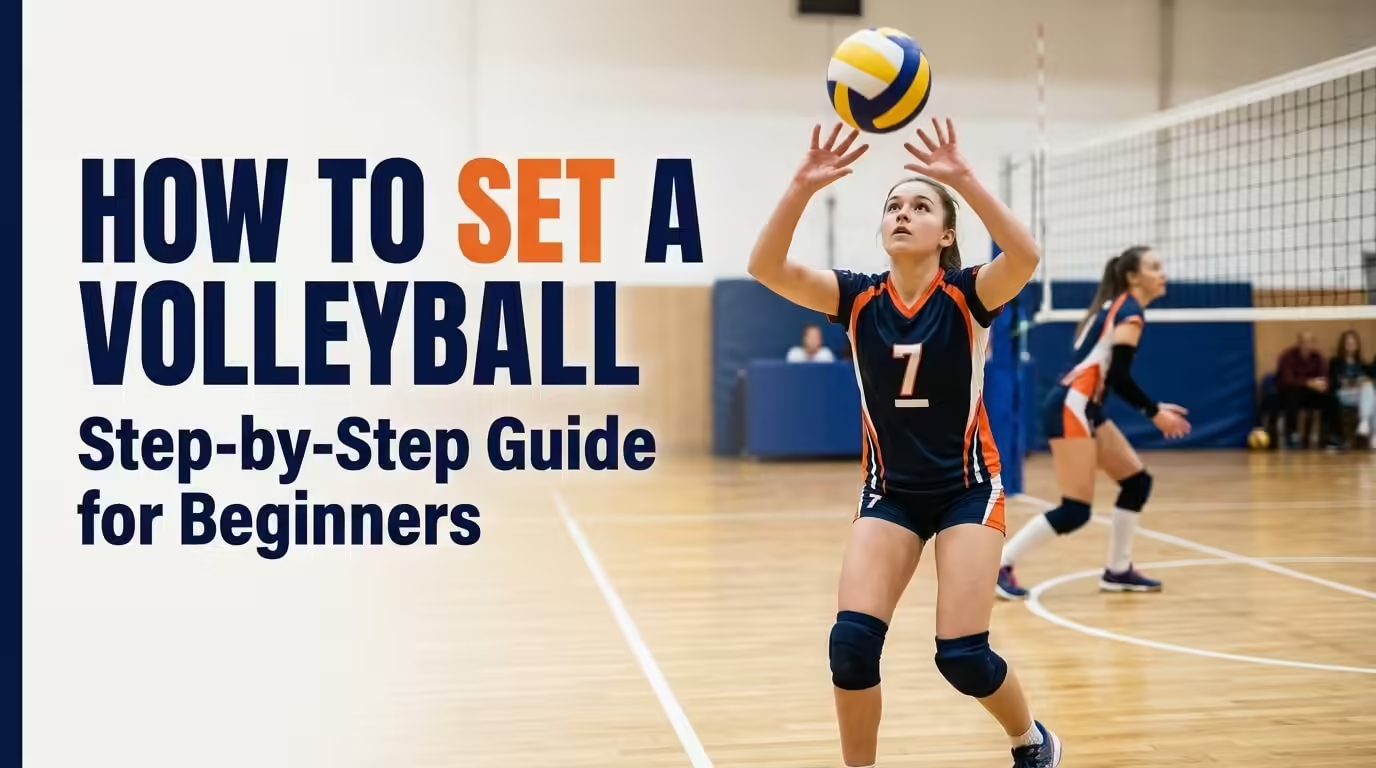
Learning how to set a volleyball correctly is an essential skill for every beginner. A good set gives your hitter the best opportunity to attack the ball and score points. Whether you are practicing at home, training with teammates, or playing your first volleyball match, mastering the setting technique can improve your overall performance.
In this step-by-step guide, you will learn the correct hand position, body posture, ball contact, footwork, and follow-through. You will also discover simple volleyball setting drills, common mistakes to avoid, and practical tips to improve your accuracy and consistency.
What Is Setting in Volleyball?
Setting is a volleyball skill used to position the ball for an attacker. It is usually the second team contact after the first pass, although players can set the ball during other situations as well.
A setter typically uses their fingertips to push the ball upward toward a hitter. The goal is to deliver a controlled, accurate ball at a suitable height and location so the attacker can perform a spike.
Setting requires good hand coordination, timing, balance, and communication. Beginners should focus on learning the basic technique before attempting fast sets or advanced offensive plays.
Step 1: Get Into the Correct Ready Position
The first step in learning how to set a volleyball correctly is developing a balanced ready position. Good posture helps you move quickly and control the ball more effectively.
Follow these tips:
- Stand with your feet approximately shoulder-width apart.
- Bend your knees slightly and keep your body balanced.
- Lean forward a little while keeping your back comfortable and neutral.
- Keep your weight balanced on the balls of your feet.
- Raise your hands in front of your forehead, ready to receive the ball.
- Keep your eyes on the ball as it approaches.
Avoid standing completely upright or locking your knees. A relaxed, balanced stance makes it easier to move in any direction.
Step 2: Position Your Hands Correctly
Hand position is one of the most important parts of setting. Your hands should form a comfortable shape above your forehead, allowing your fingers to contact the ball without catching or holding it.
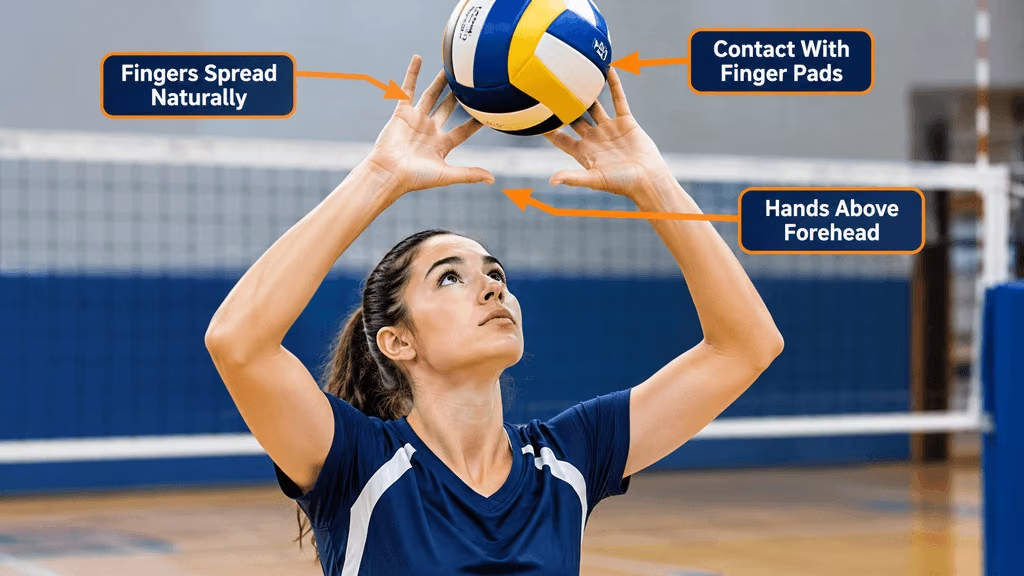
Here is how to position your hands:
- Raise both hands above your forehead.
- Spread your fingers naturally and keep them relaxed.
- Bend your elbows so your hands are ready to receive the ball.
- Shape your hands around an imaginary volleyball.
- Keep your thumbs and index fingers positioned comfortably without forcing them together.
Your hands should create a window through which you can see the approaching ball. Avoid making your hands too rigid or spreading your fingers excessively.
Beginner tip: Practice forming the correct hand shape before adding a volleyball. This helps you develop a consistent setting position.
Step 3: Contact the Ball With Your Fingers
Proper hand positioning and clean ball contact are essential for developing accurate sets. Beginners can learn more about volleyball setting techniques and review this volleyball setting technique guide for beginners to understand hand position, footwork, and setting drills. It is also helpful to review the official volleyball rules to understand legal ball contact during a match.
When the ball reaches your hands, contact it with your fingertips and finger pads rather than your palms. Your hands should cushion the ball briefly and redirect it upward in one smooth movement.
To improve your contact:
- Keep your fingers spread naturally.
- Contact the ball above your forehead.
- Keep your wrists relaxed and your elbows bent before contact.
- Use both hands together to guide the ball.
- Avoid letting the ball rest in your palms.
You should not slap, catch, or throw the ball. In a legal set, the ball must rebound cleanly from your contact without being caught or thrown.
Consistent fingertip contact helps you develop better control over the ball’s direction and height.
Step 4: Use Your Legs and Arms Together
A good set involves more than just your hands. Your legs, arms, and body movement should work together to send the ball toward the target.
Follow this sequence:
- Begin in a balanced position with your knees slightly bent.
- Receive the ball above your forehead.
- Extend your knees and hips smoothly.
- Extend your elbows and fingers to guide the ball upward.
- Finish with your arms extended toward the intended target.
Use a coordinated movement rather than pushing only with your wrists or swinging your arms forcefully.
For beginners, focus on sending the ball to a consistent height and location. As your technique improves, you can practice faster sets and different attacking options.
Step 5: Aim the Ball Toward Your Target
Accuracy is essential when setting a volleyball. A technically correct set is most useful when it reaches the hitter in a comfortable position.
To improve your aim:
- Watch the ball closely as it approaches.
- Move your feet to get underneath the ball.
- Face your intended target whenever possible.
- Use a controlled upward motion.
- Finish your movement toward the target.
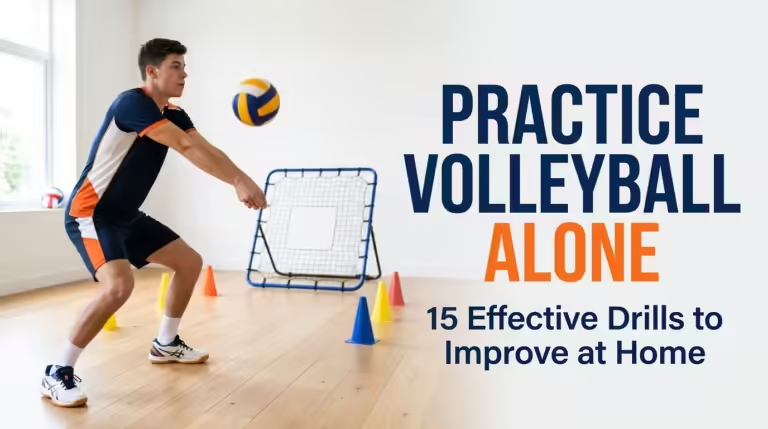
If you are practicing alone, choose a safe target area on a wall. If you have a partner, aim for a consistent spot above their hitting shoulder.
Remember that the ideal set height and distance depend on the hitter, the play, and your team’s strategy.
Step 6: Practice Your Footwork
Footwork helps you reach the ball early and maintain balance during contact. Even excellent hand technique can produce inaccurate sets if you are off balance.
Practice these movements:
- Forward movement: Take short steps toward the ball.
- Backward movement: Move carefully into position without losing balance.
- Side-to-side movement: Use controlled steps to reach balls coming from either side.
- Stopping and balancing: Get your body stable before setting whenever the situation allows.
Try to arrive under the ball rather than reaching far with your arms. Good footwork gives you more control and helps you prepare for the next play.
5 Volleyball Setting Drills for Beginners
Regular practice helps you build coordination, improve accuracy, and develop confidence. Start with simple drills and increase the difficulty gradually.
1. Self-Setting Drill
Goal: Improve hand coordination and ball control.
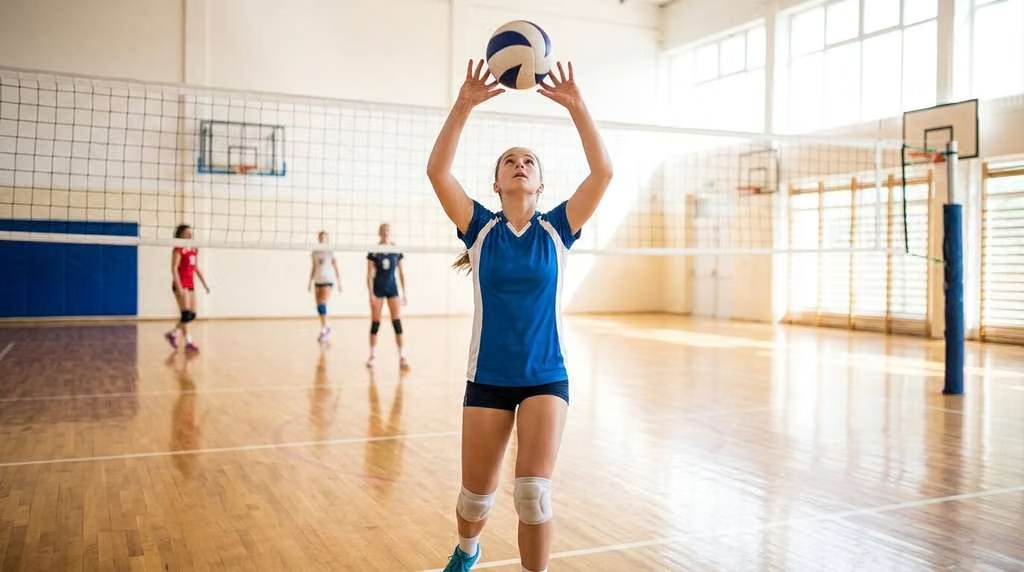
This is one of the easiest drills to practice alone.
How to do it:
- Stand with your feet shoulder-width apart.
- Position your hands above your forehead.
- Push the ball gently upward using your fingertips.
- Keep the ball at a comfortable height.
- Repeat without letting the ball drift too far away.
Start with 10–15 consecutive sets. As you improve, try maintaining control for 20 or more repetitions.
Tip: Focus on clean contact and consistent height rather than setting the ball as high as possible.
2. Wall Setting Drill
Goal: Develop consistent contact and direction.
A sturdy wall provides a useful target for solo practice.
How to do it:
- Stand a safe distance from a suitable wall.
- Set the volleyball gently toward a clear target area.
- Allow the ball to rebound.
- Position your hands and feet for the next contact.
- Repeat with a steady rhythm.
Practice for two to three minutes, taking breaks when needed.
Choose a safe location where the ball will not hit windows, fragile objects, or other people.
3. Partner Setting Drill
Goal: Improve timing and accuracy.
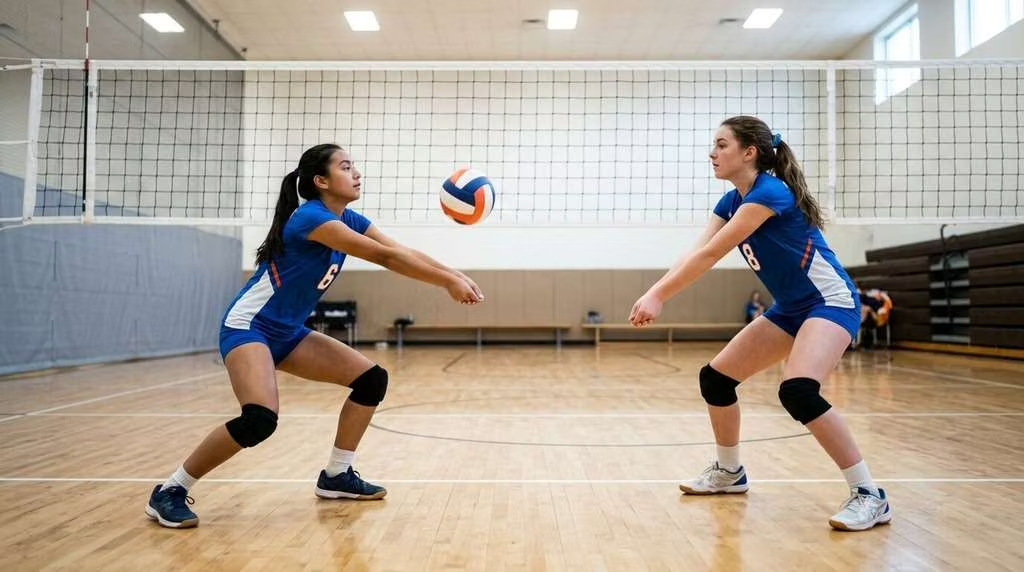
How to do it:
- Stand several feet apart from your partner.
- Toss the ball gently toward your partner’s forehead area.
- Ask them to set the ball back to you.
- Maintain a balanced position before each contact.
- Continue for 15–20 repetitions before switching roles.
As your accuracy improves, gradually increase the distance between you.
4. Set and Move Drill
Goal: Improve footwork and positioning.
How to do it:
- Start in a balanced ready position.
- Ask a partner to toss the ball slightly to one side.
- Move your feet toward the ball.
- Set it back toward your partner.
- Return to the starting position and repeat in a different direction.
Good setting technique depends on balance, coordination, and body control. Adding appropriate strength training for volleyball players to your routine can help you develop the physical foundation needed for volleyball movements.
Complete 8–12 repetitions while focusing on controlled movement. Avoid rushing at the expense of good technique.
5. Set to a Target Drill
Goal: Improve placement and consistency.
How to do it:
- Choose a safe target area on a wall or ask a partner to stand at a target position.
- Begin with a comfortable, predictable toss.
- Set the ball toward your target.
- Count how many sets reach the target area.
- Repeat and try to improve your accuracy.
Record your results during each session. Tracking progress can help you identify improvements in control and consistency.
Common Volleyball Setting Mistakes to Avoid
Beginners often make a few common mistakes while learning to set. Correcting them early can help you develop better technique.
Hitting the Ball With Your Palms
Contacting the ball with your palms can reduce control and make your setting technique less consistent. Aim to contact the ball with your fingertips and finger pads while keeping your hands relaxed.
Holding or Carrying the Ball
A set should be a clean rebound. Avoid catching, holding, or visibly throwing the ball. Practice a smooth, coordinated contact to develop better control.
Using Only Your Arms
If you rely entirely on your arms, you may struggle to set accurately when the ball is difficult to reach. Coordinate your legs, body, and arms to create a controlled movement.
Standing Too Far From the Ball
Reaching for a ball while off balance can make your sets inaccurate. Use your footwork to get underneath the ball whenever possible.
Making Your Hands Too Stiff
Excessively tense fingers can make contact uncomfortable and inconsistent. Keep your hands firm enough to control the ball but relaxed enough to move naturally.
Looking Away From the Ball
Keep your eyes on the ball as it approaches and makes contact with your hands. This helps you judge timing and improve consistency.
How to Improve Volleyball Setting Accuracy
If you want to become a better setter, practice regularly and focus on the fundamentals.
Here are some practical tips:
- Practice a little every day: Short, focused sessions can help develop muscle memory.
- Use a consistent hand position: Start each repetition with the same comfortable hand shape.
- Improve your footwork: Move into position instead of reaching whenever possible.
- Choose a target: Aim for a specific spot rather than setting randomly.
- Develop both coordination and balance: Good body control supports more accurate sets.
- Ask for feedback: A coach or experienced teammate can help identify technical problems.
- Increase difficulty gradually: Begin with stationary drills before practicing moving balls and game situations.
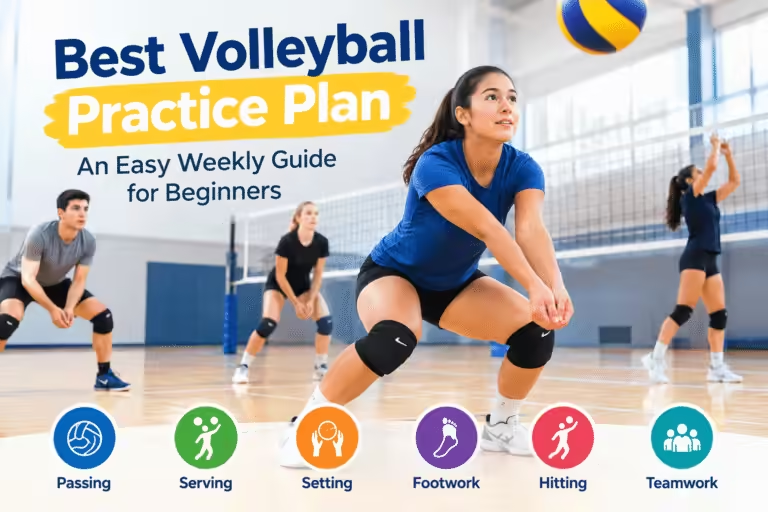
Consistent practice is essential for developing better setting skills. Follow this volleyball weekly training program for beginners to organize your practice sessions and improve your setting, passing, serving, and overall volleyball performance.
Do not focus only on the number of repetitions. Quality and control are more important than rushing through a large number of sets.
A Simple 15-Minute Volleyball Setting Workout
Use this beginner-friendly routine to structure your practice.
| Time | Drill | Main focus |
|---|---|---|
| 2 minutes | Hand-position practice | Finger shape and posture |
| 4 minutes | Self-setting | Ball control |
| 4 minutes | Wall setting | Consistency and accuracy |
| 3 minutes | Partner or target setting | Direction and timing |
| 2 minutes | Review your technique | Correct mistakes |
Practice this routine three or four times per week, adjusting the workload to your experience and recovery. Stop if you experience pain or unusual discomfort.
As your skills improve, introduce movement and more varied ball placement.
Frequently Asked Questions
What is the correct way to set a volleyball?
Position your hands above your forehead, spread your fingers naturally, and contact the ball with your fingertips and finger pads. Coordinate your legs and arms to send the ball toward your target in a smooth, controlled movement.
Can beginners practice setting a volleyball alone?
Yes. Self-setting and wall-setting drills are excellent options for solo practice. Begin with controlled repetitions and use a safe, open area.
Should a volleyball set touch your palms?
A proper overhead set generally uses the fingers and finger pads rather than the palms. Avoid catching, holding, or throwing the ball during contact.
How many times should I practice setting?
Beginners can start with 10–15 repetitions per drill and practice several times per week. Increase the workload gradually while maintaining good technique.
Why does my volleyball set go backward?
Your hands may be directing the ball behind you, or your body may be off balance. Work on moving underneath the ball, controlling your hand position, and aiming toward a clear target.
Is setting difficult for beginners?
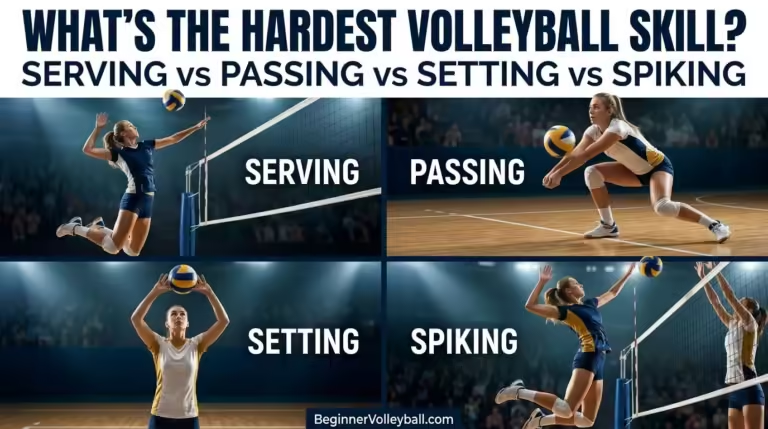
Setting can feel challenging at first because it requires timing, coordination, and accurate hand contact. With consistent practice and simple drills, beginners can gradually improve their control and confidence.
Conclusion
Learning how to set a volleyball correctly takes patience, practice, and attention to technique. Start by mastering your ready position, hand shape, fingertip contact, body movement, and target accuracy. Then use self-setting, wall setting, and partner drills to build consistency.
Avoid common mistakes such as contacting the ball with your palms, holding the ball, or reaching while off balance. Focus on clean contact and controlled movement instead of speed.
With regular practice, you can develop more accurate sets, support your hitters, and become a more confident volleyball player. Keep practicing the fundamentals, track your progress, and enjoy improving your game one set at a time.

2 Comments