
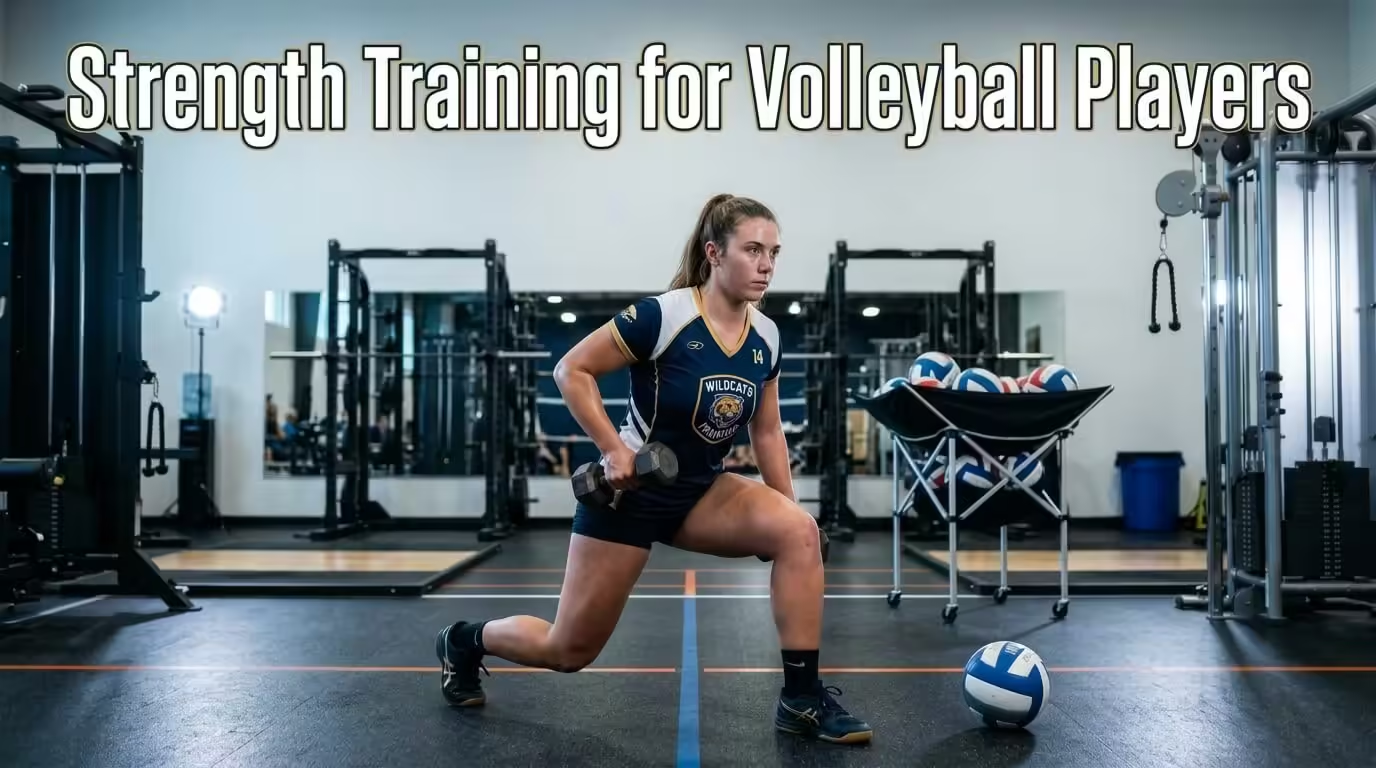
Strength training for volleyball players builds explosive jumps, stronger hits, and better stability. Try 9 proven exercises and a beginner-friendly plan.
Strength Training for Volleyball Players: 9 Proven, Powerful Exercises
Volleyball requires explosive power, quick movements, strong legs, a stable core, and excellent coordination. Whether you are a beginner or an experienced player, developing your physical strength can help you perform better on the court.
Strength training for volleyball players focuses on building the muscles needed for jumping, spiking, blocking, serving, and defensive movements. A well-designed training program can also improve balance and help prepare your body for the physical demands of volleyball.
In this guide, you will discover nine effective strength exercises, a weekly workout plan, and practical tips to help you become a stronger, more confident volleyball player.
Why Is Strength Training Important for Volleyball Players?
Strength Training for Volleyball Players repeatedly jump, land, change direction, and swing their arms at high speed. These movements require more than skill alone.
A structured strength program can help you develop several important physical qualities.
1. Improve Jumping Power
Strong glutes, quadriceps, hamstrings, and calf muscles help you produce force when jumping for a spike or block. Strength training combined with appropriate jump practice can improve your vertical-jump performance over time.
2. Hit and Serve with More Power
Spiking and serving involve coordinated movements from the legs through the core to the shoulder and arm. Building overall strength can support powerful, controlled movements when combined with proper technique.
3. Move Faster on the Court
Strength Training for Volleyball Players needs Lateral lunges, squats, and single-leg exercises help develop the strength needed for quick defensive movements, controlled stops, and changes of direction.
4. Support Joint Stability
Training the legs, hips, shoulders, and core helps improve muscular control during volleyball movements. Good technique, suitable training loads, and adequate recovery are essential for reducing unnecessary strain.
5. Maintain Performance Throughout a Match
Developing muscular strength and general fitness can help players handle repeated efforts during long practices and competitive matches.
9 Best Strength Training Exercises for Volleyball Players
These exercises target the major muscle groups used in volleyball. Beginners should start with manageable resistance, focus on proper form, and increase difficulty gradually.
1. Squats
Main muscles: Quadriceps, glutes, and core.
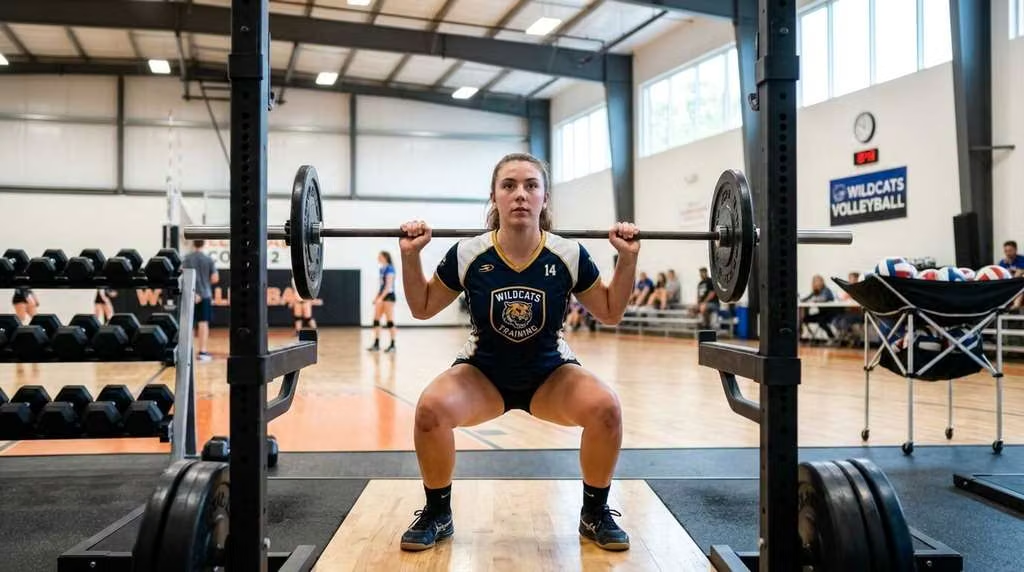
Squats develop lower-body strength, which supports jumping, landing, and defensive positioning.
How to perform:
- Stand with your feet approximately shoulder-width apart.
- Keep your chest lifted and your core engaged.
- Bend your hips and knees to lower your body comfortably.
- Keep your knees aligned with your feet.
- Push through your feet to return to standing.
Recommended sets: 3 sets of 8–12 repetitions.
Volleyball benefit: Builds a foundation for powerful jumps and controlled landings.
2. Reverse Lunges
Main muscles: Glutes, quadriceps, hamstrings, and stabilizing muscles.
Reverse lunges develop single-leg strength and balance, both important for volleyball footwork.
How to perform:
- Stand upright with your feet hip-width apart.
- Step one foot backward.
- Lower your body until both knees bend comfortably.
- Push through your front foot to return to the starting position.
- Repeat with the opposite leg.
Recommended sets: 3 sets of 8–10 repetitions per leg.
Volleyball benefit: Supports balanced movement during defensive positioning and approach steps.
3. Romanian Deadlifts
Main muscles: Hamstrings, glutes, and lower-back stabilizers.
Romanian deadlifts strengthen the posterior chain, which plays an important role in jumping and athletic movement.
How to perform:
- Stand with your feet hip-width apart, holding light dumbbells if appropriate.
- Keep your knees slightly bent.
- Push your hips backward while keeping your back neutral.
- Lower the weights along your legs until you feel a comfortable hamstring stretch.
- Drive your hips forward to stand.
Recommended sets: 3 sets of 8–10 repetitions.
Volleyball benefit: Develops hip strength and supports control during athletic movements.
4. Calf Raises
Main muscles: Calves and ankle stabilizers.
Your calves contribute to jumping, running, and repeated movements around the court.
How to perform:
- Stand upright with your feet hip-width apart.
- Hold a wall or stable surface for balance if needed.
- Raise your heels as high as comfortably possible.
- Pause briefly at the top.
- Lower your heels slowly.
Recommended sets: 3 sets of 12–15 repetitions.
Volleyball benefit: Builds calf strength and improves lower-leg muscular endurance.
5. Push-Ups
Main muscles: Chest, shoulders, triceps, and core.
Push-ups develop upper-body strength that supports the arm swing and general shoulder-girdle control needed for volleyball.
How to perform:
- Begin in a plank position with your hands slightly wider than shoulder-width.
- Keep your body in a straight line.
- Lower your chest toward the floor.
- Push back up without allowing your hips to sag.
Beginners can perform push-ups against a wall or on an elevated surface.
Recommended sets: 3 sets of 6–12 repetitions.
Volleyball benefit: Improves upper-body strength for general athletic performance.
6. Dumbbell Rows
Main muscles: Upper back, lats, rear shoulders, and biceps.
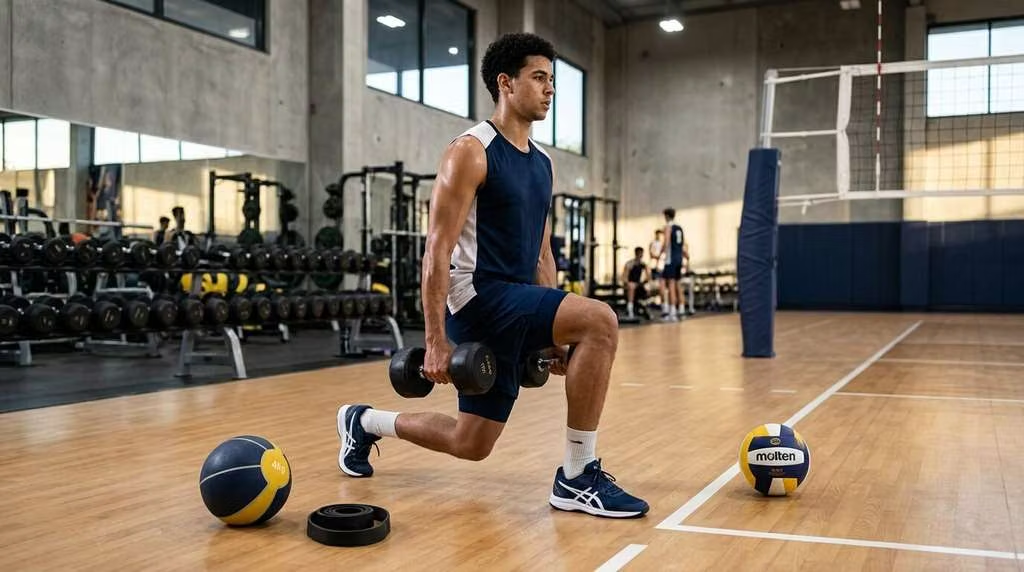
Volleyball players need balanced upper-body strength, not just strong chest and shoulder muscles. Rows train the pulling muscles that support posture and shoulder control.
How to perform:
- Hold a dumbbell in one hand and support yourself on a stable bench if available.
- Keep your back neutral.
- Pull the dumbbell toward your hip.
- Squeeze your shoulder blade gently.
- Lower the weight with control.
Recommended sets: 3 sets of 8–12 repetitions per arm.
Volleyball benefit: Develops upper-back strength to complement hitting and serving movements.
7. Planks
Main muscles: Abdominals, obliques, and other trunk stabilizers.
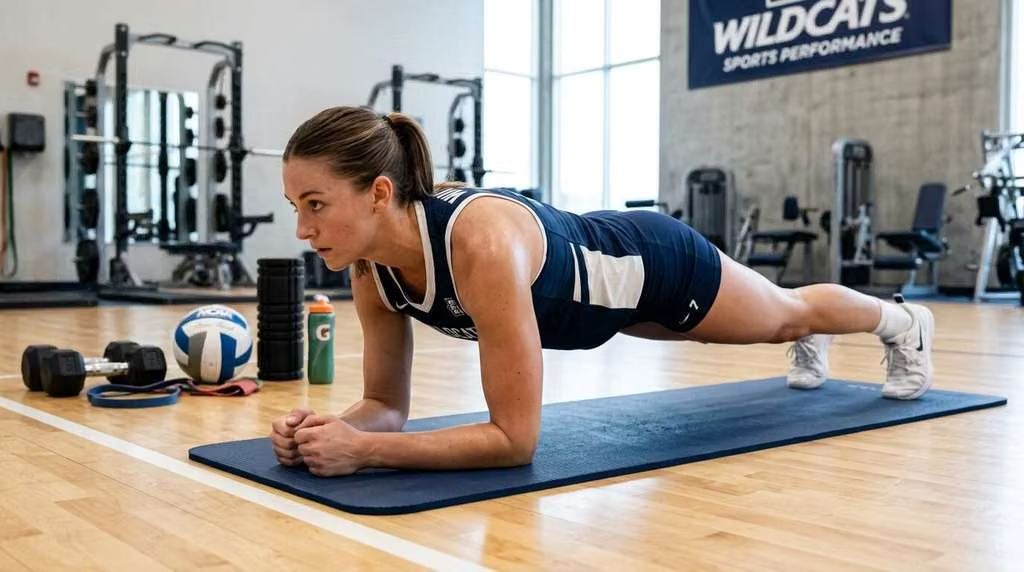
A strong core helps transfer force between your lower and upper body while maintaining control during movement.
How to perform:
- Place your forearms on the floor.
- Extend your legs behind you.
- Keep your body aligned from head to heels.
- Tighten your abdominal muscles.
- Breathe normally while holding the position.
Recommended sets: 3 sets of 20–45 seconds.
Volleyball benefit: Improves trunk stability during jumping, landing, and hitting.
8. Resistance Band External Rotations
Main muscles: Rotator cuff muscles and shoulder stabilizers.
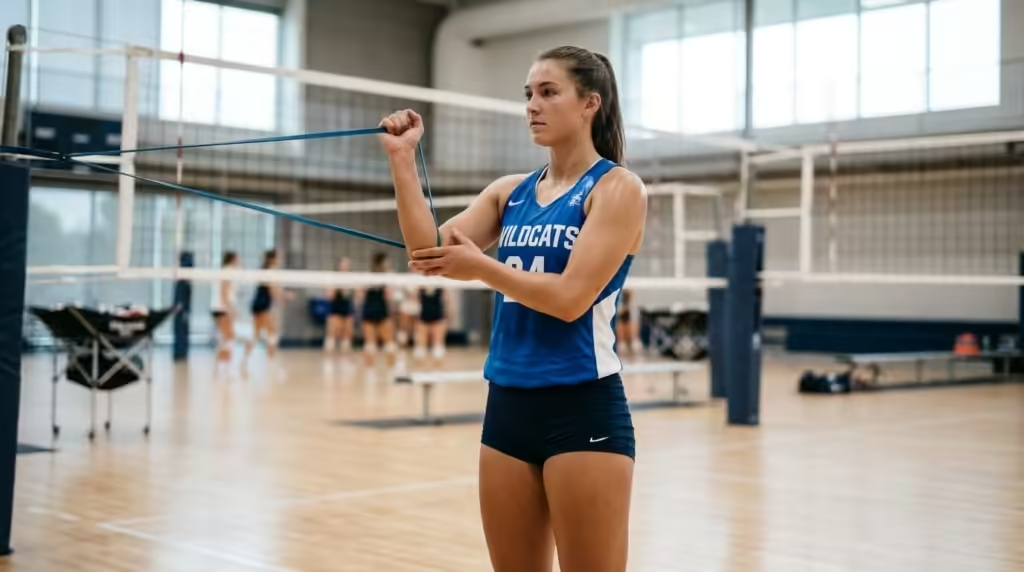
Serving and spiking place repeated demands on the shoulder. External rotation exercises help strengthen muscles involved in shoulder control.
How to perform:
- Attach a light resistance band securely at elbow height.
- Stand sideways to the attachment point.
- Keep your elbow bent approximately 90 degrees and tucked against your side.
- Rotate your forearm outward without turning your torso.
- Return slowly to the starting position.
Recommended sets: 2–3 sets of 12–15 repetitions per arm.
Volleyball benefit: Supports shoulder strength and control. Use light resistance and pain-free movement.
9. Box Jumps
Main muscles: Glutes, quadriceps, calves, and core.
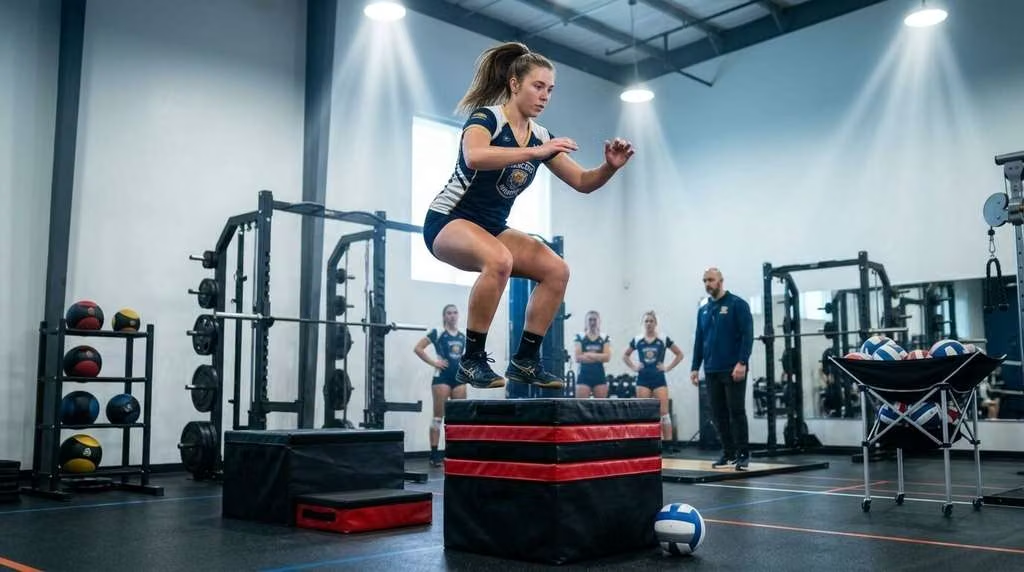
Box jumps develop explosive power when performed with appropriate technique. They are an advanced option and are not essential for every beginner.
How to perform:
- Choose a low, stable box that you can jump onto comfortably.
- Stand facing the box with your feet approximately shoulder-width apart.
- Bend your hips and knees slightly.
- Jump onto the box, landing softly with control.
- Step down rather than repeatedly jumping off the box.
Recommended sets: 3 sets of 3–5 repetitions. To improve your jumping ability, combine strength exercises with these 5 Best Drills: Plyometric Training for Volleyball Players
Volleyball benefit: Trains explosive lower-body power that can complement volleyball-specific jump practice.
Stop if your landing becomes uncontrolled, and master basic squats and landing mechanics before progressing to jumps.
Weekly Strength Training Plan for Volleyball Players
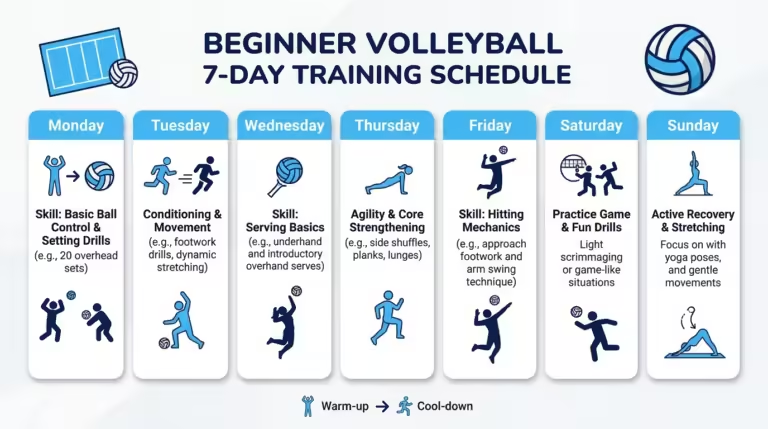
You do not need to lift weights every day to improve your performance. A balanced weekly schedule allows you to develop strength while leaving time for volleyball skills and recovery.
| Day | Training Focus | Suggested Duration |
|---|---|---|
| Monday | Lower-body strength | 35–45 minutes |
| Tuesday | Volleyball skills and light mobility | 30–45 minutes |
| Wednesday | Upper-body and core strength | 30–40 minutes |
| Thursday | Rest or easy recovery | 15–20 minutes |
| Friday | Full-body strength and optional jumps | 35–45 minutes |
| Saturday | Volleyball practice and match preparation | 45–60 minutes |
| Sunday | Rest and recovery | As needed |
Adjust this schedule to your age, experience, match calendar, and overall training load. If you have a demanding match or intense volleyball practice, reduce or move your strength session to avoid excessive fatigue. For a more complete training routine, follow our Volleyball Weekly Training Program for Beginners: The Ultimate 7-Day Guide
Sample Strength Workout for Beginners
Here is a simple full-body session you can use to get started.
| Exercise | Sets | Repetitions |
|---|---|---|
| Bodyweight squats | 3 | 10 |
| Reverse lunges | 2 | 8 per leg |
| Push-ups | 3 | 6–10 |
| Dumbbell rows | 3 | 10 per arm |
| Calf raises | 2 | 15 |
| Plank | 3 | 20–30 seconds |
| Resistance band external rotations | 2 | 12 per arm |
Rest: Take approximately 60–120 seconds between sets, or longer when necessary to maintain good technique.
Start with two strength sessions per week if you are new to resistance training. Complete a 5–10-minute warm-up with easy movement and dynamic mobility before exercising.
How to Build Strength and Jump Higher for Volleyball
Strength training is most effective when it fits into a broader volleyball development plan.
Train Consistently
Follow your program for several weeks rather than changing exercises every session. Record your weights, repetitions, and technique so you can track progress.
Increase Difficulty Gradually
When you can complete every repetition with good form, consider adding a small amount of resistance or a repetition. Avoid increasing weight and training volume aggressively at the same time.
Combine Strength with Jump Training
Squats and lunges develop strength, while carefully programmed jumps train explosive movement. Once you have the necessary strength and landing control, combine these methods with volleyball-specific approach jumps and blocking footwork.
Eat Enough and Stay Hydrated
Your body needs adequate energy, protein, carbohydrates, fluids, and a balanced diet to support training and recovery. Avoid extreme diets that leave you under-fueled for practice.
Prioritize Sleep and Recovery
Muscles adapt between training sessions. Get sufficient sleep, take recovery days, and reduce training if you experience persistent soreness or declining performance.
Common Strength Training Mistakes Volleyball Players Should Avoid
Avoid these common errors when starting your strength program:
- Lifting too heavy too soon: Start with a resistance level that allows controlled repetitions.
- Skipping the warm-up: Prepare your muscles and joints before demanding exercise.
- Ignoring the upper back and shoulders: Include pulling exercises and appropriate shoulder-stability work.
- Doing too many jumps: High-impact training needs gradual progression and adequate recovery.
- Training through pain: Stop exercises that cause sharp or persistent pain and seek advice from a qualified healthcare professional when necessary.
- Neglecting volleyball skills: Strength supports your game but does not replace serving, passing, setting, blocking, and spiking practice.
Young athletes should learn proper technique with qualified supervision and should not attempt maximal lifts without appropriate coaching.
Frequently Asked Questions
How many days a week should volleyball players do strength training?
Many beginners can start with two nonconsecutive strength sessions per week. More experienced players may benefit from additional sessions depending on their competition schedule, recovery, and training goals.
Does strength training help volleyball players jump higher?
Yes. Developing lower-body strength can improve your ability to produce force. Combining strength training with appropriately programmed plyometrics and volleyball-specific jump practice can further support vertical-jump performance.
Can volleyball players do strength training at home?
Yes. Bodyweight squats, lunges, push-ups, planks, calf raises, and resistance band exercises can provide an effective starting point without a full gym.
Should volleyball players lift weights before or after practice?
It depends on the session’s main goal. If strength development is the priority, perform strength work when you are relatively fresh. If volleyball skill quality is the priority, complete technical practice before fatiguing strength work, or schedule the sessions separately when possible.
Is strength training safe for beginner volleyball players?
With suitable exercises, gradual progression, and proper technique, strength training can be appropriate for beginners. Young athletes should receive qualified supervision, use manageable loads, and avoid exercises that cause pain.
Final Thoughts
A well-planned strength program can help volleyball players build stronger legs, improve core stability, develop balanced upper-body strength, and prepare for explosive movements on the court.
Start with the basics, practice each exercise with proper form, and progress gradually. Combine strength training with volleyball skills, good nutrition, and adequate recovery to build a stronger foundation for your game.
Ready to improve your volleyball performance? Choose a few exercises from this guide, follow a consistent weekly schedule, and track your progress one workout at a time.
Keep training smart, stay consistent, and enjoy becoming a better volleyball player!
Training note: This article provides general fitness information, not individualized medical advice. Adapt exercises to your ability and seek qualified coaching when needed.

4 Comments