
New to volleyball? Learn the 15 most common volleyball mistakes beginners make, plus simple fixes to improve your passing, serving, and teamwork fast.
Why Volleyball Mistakes Beginners Make Matter
Volleyball looks simple from the sidelines: hit the ball over the net, right? But anyone who has stepped onto the court knows it takes timing, teamwork, and technique. The good news is that most volleyball mistakes beginners make are easy to fix once you know what to look for.
In this guide, we break down the 15 most common errors new players make and give you practical, easy-to-apply fixes. Whether you play indoor, beach, or just casual games with friends, avoiding these mistakes will help you improve faster, play with more confidence, and enjoy the game more.

1. Standing Flat-Footed
The number one habit that holds beginners back is standing still. Volleyball is a game of constant movement, and a flat-footed player is always a step late.
How to fix it: Stay on the balls of your feet with knees slightly bent and weight forward. Take small, quick “split steps” as the ball is served or attacked, so you can move in any direction instantly.
2. Using Poor Passing Form
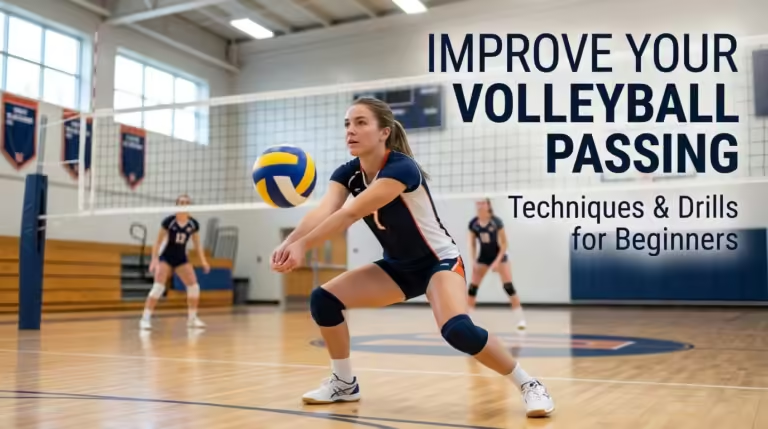
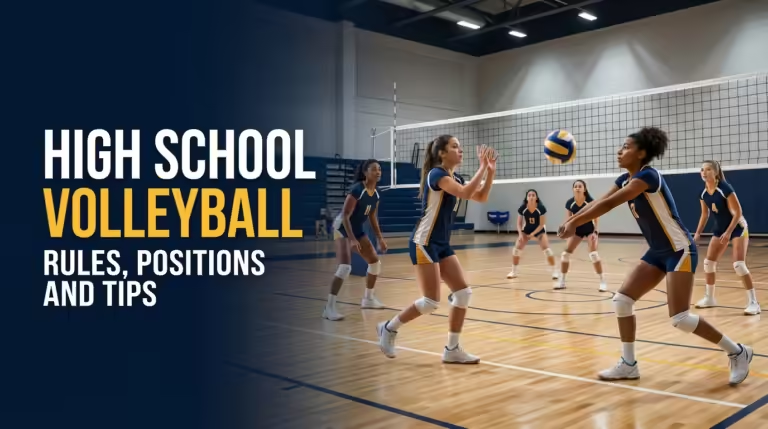
Passing (or bumping) is the foundation of the sport. Beginners often swing their arms, bend their elbows, or use their hands instead of their forearms, which sends the ball in unpredictable directions.
How to fix it: Keep your arms straight and together, with a flat platform made from your forearms. Contact the ball on the fleshy part of your forearms, just above the wrists. Use your legs to guide the ball rather than swinging from the shoulders.
3. Not Communicating With Teammates
Silent teams collide, leave balls to drop between players, and lose points they should win. Many new players are too shy to call the ball.
How to fix it: Call “Mine!”, “Out!”, or “Help!” loudly and early. Agree on simple signals before the match. Strong communication is one of the fastest ways to improve team performance.
4. Watching the Ball Instead of Reading the Play
Beginners often fixate on the ball alone. Experienced players, on the other hand, read the hitter’s shoulders, arm swing, and body angle to predict where the ball will go.
How to fix it: Track the ball, but also watch the opponent’s setup and hitter. Over time, you will start anticipating attacks before they happen.
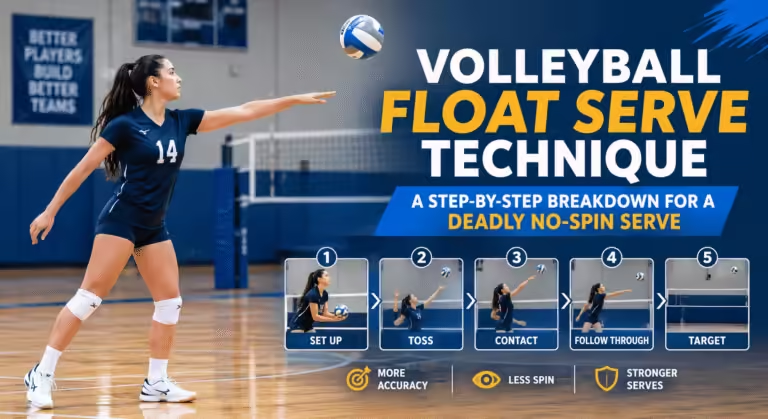
5. Serving Too Hard (or Too Weak)
Many beginners try to crush every serve and end up hitting the net or sending the ball out. Others serve so softly it becomes an easy point for the opponent.
How to fix it: Prioritize consistency first. Start with a simple underhand serve, aim for the deep middle of the court, and only increase power once you can land 8 out of 10 serves in play.

6. Swinging Arms Too Much When Passing
This is closely tied to passing form, but it deserves its own spot. Big arm swings make the ball fly uncontrollably, especially against hard serves.
How to fix it: Think “quiet arms.” Let the ball’s own speed do most of the work. On fast serves, simply absorb the ball with a slight angle of your platform. On slow balls, add a little leg drive.
7. Setting With Flat or Stiff Hands
A good set is soft, accurate, and gives your hitter time to attack. Beginners often use stiff palms or let the ball hit their fingers hard, causing double contacts or wobbly sets.
How to fix it: Form a “window” with your thumbs and index fingers above your forehead. Contact the ball with your finger pads (not your palms), extend your arms and legs together, and follow through toward the target.
8. Skipping the Warm-Up and Stretching
Jumping straight into a game with cold muscles is a fast way to strain a shoulder, ankle, or knee. Volleyball involves explosive jumping and repeated arm swings.
How to fix it: Spend 10 minutes on dynamic stretches such as arm circles, lunges, leg swings, and light jumping. Finish your session with static stretching to improve flexibility and recovery.
9. Ignoring Footwork Before Hitting
A powerful spike starts with the feet, not the arm. Beginners often jump from a standing position or approach at the wrong angle, losing both height and power.
How to fix it: Learn the standard approach pattern. Right-handed hitters usually take a left-right-left step, swinging both arms back and then up for an explosive jump. Practice the footwork slowly before adding the hit.
10. Hitting Without a Plan
Slamming the ball as hard as possible with no target is a common beginner trap. A powerful hit that goes out of bounds or straight to a defender is a wasted attack.

How to fix it: Aim for open spaces, the corners, or the gaps between defenders. Placement beats power, especially at the beginner and intermediate levels.
11. Forgetting the Basic Rules and Rotations
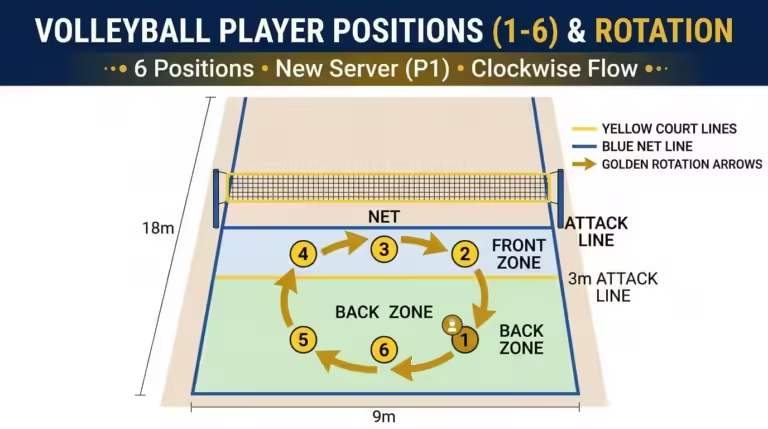
Rotation errors, net touches, and double hits are among the most frequent reasons beginners give up easy points. Not knowing the rules slows down the whole team.
How to fix it: Learn the core rules: rotation order, the three-touch limit, back-row attack restrictions, and what counts as a net violation. Print a rotation chart or keep a quick-reference card in your bag. You should learn NCAA Volleyball Rules: 15 Essential Rules Every Fan Should Know
12. Playing Out of Position
Chasing every ball, regardless of your role, leaves holes in the court and causes collisions. Beginners often abandon their zone as soon as the ball moves.
How to fix it: Understand each position’s responsibilities, from outside hitter and middle blocker to setter, libero, and defensive specialist. Return to your base position after every play.
13. Weak Blocking Technique
New players often reach over the net late, swing their arms wildly, or fail to “penetrate” over the top. Others simply forget to block at all.
How to fix it: Keep your hands up, shoulder-width apart, and press them over the net rather than swatting. Time your jump slightly after the hitter’s approach. Even a soft block can slow down an attack and help your back-row defenders.
14. Letting Mistakes Affect Your Mindset
Volleyball is a game of rapid errors and quick recoveries. Beginners often dwell on a missed serve or a dropped ball, which leads to more mistakes on the next play.
How to fix it: Adopt a short reset routine: take a breath, clap or high-five a teammate, and refocus on the next point. Mental toughness is a skill you can train just like passing or serving.
15. Not Practicing the Fundamentals Consistently
Many beginners only play games and never practice drills. Without repetition, bad habits get locked in and progress stalls.
How to fix it: Set aside time for focused drills each week. Try wall passing, partner setting, serve targets, and shadow footwork. Even 20 minutes of deliberate practice, three times a week, can make a visible difference in a month.

Quick Recap: Volleyball Mistakes Beginners Should Fix First
- Stay light on your feet and move constantly.
- Use a flat, stable platform when passing.
- Communicate early and loudly.
- Serve consistently before adding power.
- Warm up properly to prevent injury.
- Learn rotations, rules, and your position.
- Aim your hits instead of just swinging hard.
- Practice fundamentals every week.
Frequently Asked Questions
What is the hardest skill for beginners in volleyball? Most beginners find passing and serving the most challenging at first because both require precise contact and consistency. Spiking and blocking usually come later once the fundamentals feel natural.
How long does it take to get good at volleyball? With regular practice (two to three sessions a week), most beginners notice clear improvement within one to three months. Reaching a competitive level can take a year or more, depending on your goals.
What should beginners practice first in volleyball? Start with passing, then setting, then serving. These three skills form the base for every rally. Add hitting and blocking once you can control the ball reliably.
Is volleyball hard to learn? Volleyball is easy to start but takes time to master. Focus on small improvements, avoid the common mistakes listed above, and enjoy the process.
Conclusion
Every great volleyball player started out making these exact mistakes. The difference is that they recognized them, practiced the fixes, and kept showing up. Review this list before your next session, pick two or three mistakes to work on, and track your progress over time. You Can follow Official international volleyball organization.
If you found this guide helpful, share it with a teammate or friend who is just getting into the game. Ready to level up further? Explore our upcoming guides on volleyball drills, beach volleyball tips, and the best volleyball shoes for beginners.